For the first time after the 18th National Congress of the Communist Party of China, one of the country's top leaders has taken a clear stand on universal suffrage and the "Occupy Central" movement in the Hong Kong Special Administrative Region. At a high-level meeting with media executives from Hong Kong on Friday, Vice-President Li Yuanchao said the central government strongly opposes the movement because it is illegal.
Since the implementation of the Individual Visit Scheme in 2003, there has been a rapid increase in the number of Chinese mainland residents visiting Hong Kong, which has created some social problems. For example, Hong Kong's downtown area, which is already overpopulated, has been overwhelmed with mainland tourists leading to a shortage of some daily necessities. Many Hong Kongers blame mainland tourists' panic buying for this.
Moreover, with Putonghua being spoken more widely in the region, many Hong Kong residents have become wary of (and in some cases hostile toward) mainland tourists and the IVS. The "Occupy Central" movement can be seen as an outcome of this hostility. And last week some "Occupy Central" activities even made a public plea for a "true suffrage".
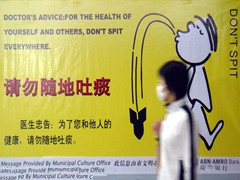
This hostility resulted in an incident recently when some Hong Kong residents confronted a mainland couple for allowing their son (a toddler) to urinate in a street. The fisticuffs that followed could have been avoided had both sides exercised restraint.
Not long ago, a small number of radical Hong Kong residents even held a demonstration against the IVS, describing mainland shoppers as "locusts" and urging the government to limit the number of mainland visitors.
The "anti-locust" campaign will not only hurt tourism in the region, but also harm relations between Hong Kong residents and their mainland compatriots. This is a very dangerous trend.
Hong Kong residents have to realize that the advantages of the IVS far outweigh its disadvantages for Hong Kong. The Asian financial crisis forced Hong Kong into recession, increasing unemployment. And the 2003 SARS outbreak dealt a further blow to Hong Kong's economy. The central government responded swiftly by launching the IVS to boost Hong Kong's economy, which has helped increase the region's retail sales from HK$170 billion ($21.9 billion) in 2003 to HK$440 billion nowadays. Mainland tourists have also helped create thousands of jobs in Hong Kong.
Hong Kong's tourism-related industries employ about 600,000 people, accounting for about one-sixth of its total labor force. The region's booming tourism industry not only contributes a big chunk of the local revenue, but also helps provide many resources for social welfare.
 New type of urbanization is in the details

Copyright 1995 - . All rights reserved. The content (including but not limited to text, photo, multimedia information, etc) published in this site belongs to China Daily Information Co (CDIC). Without written authorization from CDIC, such content shall not be republished or used in any form. Note: Browsers with 1024*768 or higher resolution are suggested for this site.
License for publishing multimedia online 0108263 Registration Number: 130349