US Secretary of Defense Chuck Hagel's tour to Liaoning, China's sole aircraft carrier, made headlines recently. Many people have demanded to know why exactly Hagel visited or China invited him to visit Liaoning. Was it to increase trust between the two countries? Or, was it to show China's openness?
Most major media outlets in the US see the "pivot to Asia" policy as an effort by Washington to counter Beijing's influence in Asia. It is apparent that the US has lost some of its aura and power during the global financial crisis. In November 2011, the US signed a free trade agreement with the Republic of Korea. And with the development of the Trans-Pacific Partnership, Asia quickly became vital for the US' future economic prosperity.
This placed the Asia-Pacific region at the heart of US economics and trade initiatives. The Barack Obama administration announced the "pivot to Asia" policy in 2012, saying it would help establish a more balanced economic, diplomatic and security approach. The fact is, "pivot to Asia" signifies a significant shift in US foreign policy and is aimed at sustaining US influence in Asia.
Notably, during or before Hagel's visit to Asia, Obama didn't use the term "pivot". Besides, former US national security advisor Tom Donilon often used the term "re-balancing" rather than "pivot". This shows that rhetoric can shape perceptions and change expectations, as well as play an important role in determining the outcome of a foreign policy.
In the light of such understanding, the US' seemingly anti-China stance in major territorial disputes, particularly those over Diaoyu Islands and the islands in the South China Sea, can be perceived as Washington's effort to maintain its influence over the countries in dispute with China rather than as a challenge to China. It is important to remember that maintaining a constructive relationship with China is one of the most important agendas of the US.
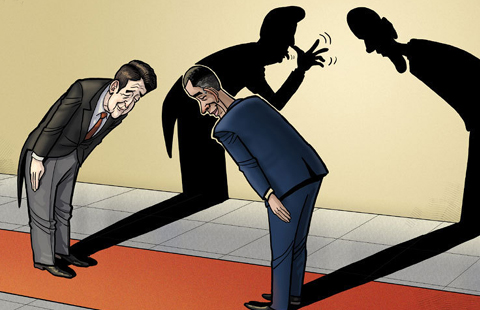
The US and China both should realize that their perspectives about what constitutes "transparency" differ. China perceives inviting Hagel to visit Liaoning as a sincere effort to make its defense sector more transparent, because Liaoning is its only aircraft carrier and a symbol of its peaceful rise. The US, however, expects China to show more such gestures before it can believe it is transparent.
While the US believes that transparency precedes trust, for China, trust must precede transparency. The Chinese believe trust, not pieces of paper, binds two sides in any negotiation, and if the US expects China to be more transparent, it should pay greater attention to this factor.
Perhaps some other Asian countries should be factored into Sino-US relations to get a better understanding of its importance. Irrespective of the intensity of tension between the US and China, most Asian countries will choose to maintain relations with both because that is how they stand to gain the most. No country wants to be forced to choose sides in a tension-filled Sino-US relationship.
ESTER TAN, via e-mail
Readers' comments are welcome. Please send your e-mail to opinion@chinadaily.com.cn or letters@chinadaily.com.cn or to the individual columnists. China Daily reserves the right to edit all letters. Thank you.
(China Daily 04/21/2014 page9)


Copyright 1995 - . All rights reserved. The content (including but not limited to text, photo, multimedia information, etc) published in this site belongs to China Daily Information Co (CDIC). Without written authorization from CDIC, such content shall not be republished or used in any form. Note: Browsers with 1024*768 or higher resolution are suggested for this site.
License for publishing multimedia online 0108263 Registration Number: 130349