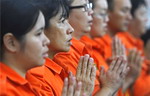
Today in the Central African Republic, government and community leaders are struggling to help the country find the path of peace.
On Monday in Kigali, I joined the people of Rwanda in marking the 20th anniversary of the genocide, the reverberations of which are still being felt across an arc of uncertainty in Africa's Great Lakes region - and in the collective conscience of the international community.
Each situation has its own dynamics. So does the Syrian conflict, which each day claims new victims. But each has posed a complex, life-and-death challenge: what can the international community do when innocent populations are being slaughtered in large numbers and the government is unable or unwilling to protect its people - or is among the very agents of the violence? And what can we do to prevent these atrocities from occurring in the first place?
The genocides in Rwanda and Srebrenica were emblematic failures of the international community. The scale of the brutality in Rwanda still shocks: an average of 10,000 deaths per day, day after day, for three months, with hateful radio broadcasts inflaming and inciting Rwandans to kill Rwandans.
The international community has since made important strides in acting on the lessons of these awful events. We are now united against impunity, epitomized by the establishment of the International Criminal Court. International and UN-assisted tribunals, including the International Criminal Tribunal for Rwanda, are pursuing accountability and having a discernible deterrent effect on would-be violators of basic international norms. In a landmark judgement, a former head of state has been convicted of war crimes.
The international community has endorsed the "responsibility to protect"; states can no longer claim that atrocity crimes are a domestic matter beyond the realm of international concern. Growing numbers of governments and regional organizations are creating mechanisms dedicated to genocide prevention. The United Nations and its partners are more frequently deploying human rights monitors to trouble spots - "eyes and ears" that show governments and non-state actors alike the world is watching. And since such crimes take planning, we are targeting the key risk factors, from the lack of institutions to grievances left unaddressed.
We are also acting more robustly to protect civilians, including from rampant sexual violence. Assertive peacekeeping approaches have defeated one of the most brutal militias in the eastern Democratic Republic of the Congo. The UN opened the gates of its peacekeeping installations in South Sudan to shelter tens of thousands of people from deadly threats. Twenty years ago, such steps would have been unthinkable. Today, this is deliberate policy, an example of our new "Rights Up Front" initiative in action - a lesson of Rwanda made real. These situations remain fragile, but the thrust is clear: more protection, not less.
 New type of urbanization is in the details

Copyright 1995 - . All rights reserved. The content (including but not limited to text, photo, multimedia information, etc) published in this site belongs to China Daily Information Co (CDIC). Without written authorization from CDIC, such content shall not be republished or used in any form. Note: Browsers with 1024*768 or higher resolution are suggested for this site.
License for publishing multimedia online 0108263 Registration Number: 130349