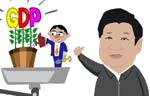
The Third Plenum of the 18th Communist Party of China Central Committee in November made it clear that the key to the country's comprehensive reforms was proper handling of government-market relations and allowing the market to play a decisive role in the distribution of resources.
This concept, in line with the general law of market economy, is expected to end the decades-long government-dominated economic growth model, and help the country pursue a more equitable and sustainable development path, and expedite reforms in economic, political and other fields.
The concept of allowing the market to "play a basic role in the distribution of resources under national macro-regulations" was first raised at the 14th National Congress of the CPC in 1992. It formed an important theoretical basis for China to break the barriers of the planned economy, expedite market-oriented reforms, create a favorable atmosphere for the reform of State-owned enterprises and promote the private sector's development. The subsequent establishment of a market mechanism ignited China's economic vigor and brought in two decades of fast-paced growth.
The establishment of a basic market economic framework and China's entry into the World Trade Organization in the 21st century helped the Chinese economy to further open up to the world. While China made notable achievements in promoting marketization during that time, it also saw the emergence or intensification of some problems such as environmental deterioration, ordinary people's difficulty in getting affordable education and healthcare, and lack of a sound pension system. This was also the time when a debate sparked over whether SOEs or the private sector should play the leading role in the national economy.
For more than a decade, China emphasized the market's basic role in resource distribution. But a consensus could not be reached on whether the government or the market should have the final say in resource distribution.
After China decided to establish a socialist market economic system, it allowed the market to play a basic role in distributing resources. But the government continued to dominate or intervene in investments, the pricing mechanism and other market activities. In particular, following the global financial crisis, growth-thirsty local governments reinforced the government-dominated economic growth model, a practice that has seriously stifled market vitality, exacerbated overcapacity and raised local government debts, threatening the entire financial system.
Under these circumstances, the decision of the Third Plenum of the 18th CPC Central Committee to allow the market to play a "decisive role" - as opposed to the earlier "basic role" - in resource distribution is a milestone in China's market reforms and pursuit of an equitable and sustainable development path.
 New type of urbanization is in the details

Copyright 1995 - . All rights reserved. The content (including but not limited to text, photo, multimedia information, etc) published in this site belongs to China Daily Information Co (CDIC). Without written authorization from CDIC, such content shall not be republished or used in any form. Note: Browsers with 1024*768 or higher resolution are suggested for this site.
License for publishing multimedia online 0108263 Registration Number: 130349