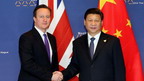
China is aware that these reforms will reap external reactions but it expects more positive than negative ones. China had done two things. First, it agreed with the U.S to lay down a new basis for a major powers’ relationship: mutual respect; non-intervention in each country’s domestic issues, and cooperation based on a win-win principle. The new rules between the big powers hopefully will reduce tensions and prevent misunderstanding.
Secondly, it agreed that there is a need for China to rise or develop peacefully, and that China should be able to create a community of interest between China and other countries, especially with her close neighbors.
Currently, war is no more an alternative, with the existence of nuclear weapons, while confrontations like in the Cold War do not help global economic cooperation since it is still in a precarious situation in the medium term. Thus, the only positive alternative is to create a community of interest.
China's relations with ASEAN or Southeast Asia, whose member countries are considered as its closest neighbors, is among others defined by the problems arising from the South China Sea disputes. How China is going to create a common interest with ASEAN on the South China Sea issue is very critical. That is why we now agreed to establish CBMs through two efforts: the implementation of the Declaration of Conduct (DoC) for fisheries, environment, resources, and joint-development, and the formulation of a Code of Conduct (CoC) to create a regional order to prevent conflict or manage it when conflict arises. It is not to solve the sovereignty problems between the claimants, which is theirs to solve bilaterally in the longer term. This cooperation consist of three layers, between governments (ASEAN + China), between 1.5 track efforts by forming an Eminent Persons and Experts Group (EPEG), and among think tanks. This is the way how we build an ASEAN-China common interest on the most important issue between the two.
The most difficult issue in the region now is the the relationship between China and Japan regarding overlapping claims on the Diaoyu, or Senkaku, islands group. The problem is residual from World War II, and the historical part of the issues is complicated. That is why PM Abe’s revisionist statement on World War II and its impact does not help. Second is on the role of the US, which is not conducive to involving herself in the dispute between China and Japan despite her defense treaty with Japan.
Third, Deng Xiaoping was right when he argued about postponing the resolution of the claims, and going for a joint-development. But so much water has gone under the bridge, which begs the question as to whether going back to his wisdom is no longer possible.
What the region can do is to advise caution and restraint to both sides, because so much is at stake for East Asia's stability and the development of tensions and conflict can flare up due to policies on both sides. For both sides there is the need to immediately create direct contact and a mechanism to prevent misunderstanding, especially among the military.


Copyright 1995 - . All rights reserved. The content (including but not limited to text, photo, multimedia information, etc) published in this site belongs to China Daily Information Co (CDIC). Without written authorization from CDIC, such content shall not be republished or used in any form. Note: Browsers with 1024*768 or higher resolution are suggested for this site.
License for publishing multimedia online 0108263 Registration Number: 130349