Time for some soul-searching
To make matters worse, even on the economic issues, Russia does not have to rely solely on Japan anymore, because two other players have entered the arena: China and the Republic of Korea. From Russia's perspective, the "strategic partnership" with China offers it as much as, if not more than, its relationship with Japan. Among other things, China has a huge demand for energy, holds huge amounts of foreign reserves and its economy is developing rapidly.
In terms of transforming the Russian economy through cooperation with other high-tech economies, the ROK now competes with Japan. And China is expected to join the race soon. By and large, Japan has lost the role as a regional leader it enjoyed two decades ago. So, although Abe stressed at the press conference that he and the Russian president had built "a relationship of mutual personal trust", Putin might have had a very different understanding of what this relationship would imply.
To understand why Japan is in the position it is in today and the direction it may take in the future, it is crucial to know its history. Starting with the Meiji Restoration, Japan entered the modern era, opening a new chapter in its history. Since the Meiji Restoration coincided with the Second Industrial Revolution, Japan seized the once-in-a-thousand-year opportunity to transform its economy and eclipse its neighbors.
Within 30 years, Japan became a "great power", subduing the Qing Dynasty (1644-1911) and getting the upper hand in the Russo-Japanese War of 1904. But Japan's high ambitions and feeling of invincibility not only led to aggression and rapid expansion of its war machinery bringing untold sufferings on its neighbors, but also caused its downfall in 1945.
Japan did transform itself into a high-tech economy after the end of World War II. But its rise came to a sudden halt in the 1990s, when political instability led to long-term economic stagnation, which it is yet to overcome. Hence, Japan finds itself at a crossroads again, just as it was in the years leading up to the Meiji Restoration and immediately after World War II.
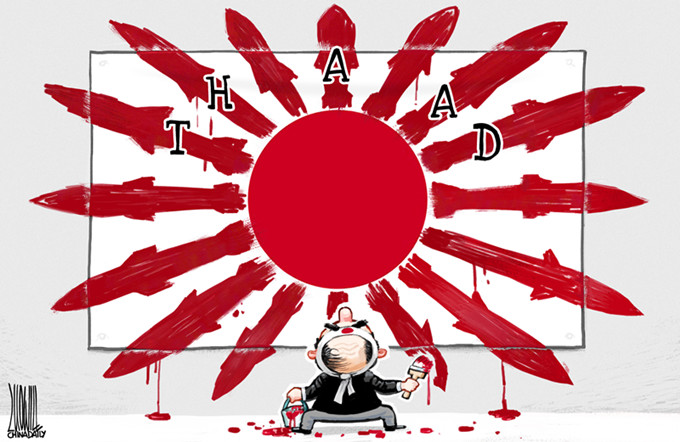
It is thus important for Japan to know what really its national interests are and analyze why it has territorial disputes with almost all its neighbors. The Japanese elites need to ask themselves whether reverting to their imperial past will help them in the post-modern world. They should also ask themselves why cabinet members visit the Yasukuni Shrine that honors war criminals, why Abe puts on a camouflage jacket and helmet and stands on a tank, and why right-wing forces are trying desperately to revise Japan's apology for forcing women into sexual slavery before and during World War II.
Japan needs to take a step back and reflect on its recent actions and how it is perceived by its neighbors and partners. The Japanese government should be aware of the country's historical burden and its implications on any future decision. It must realize that it can move forward only if it reaches a mutual understanding with its neighbors on the above-mentioned issues.
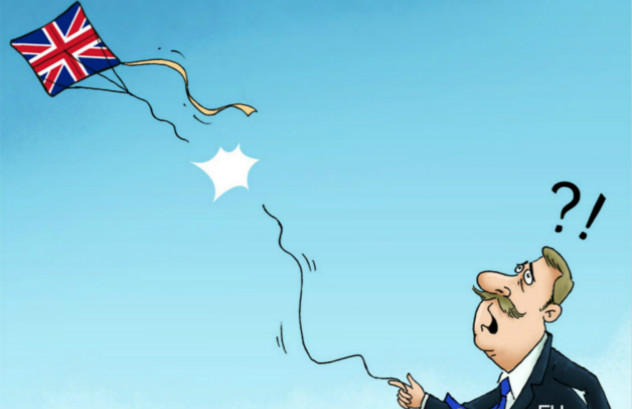
If Japan fails to do so, it will keep being rebuffed both by its neighbors and partners, no matter how delicious the sushi Abe carries to Russia and other countries are. The Japanese may have understood at least one thing: Russians (as well as people in many other countries) can easily keep both: a good appetite and a clear mind.
The author is a research fellow at the Chinese Academy of Social Sciences, and visiting scholar at Stanford University, California.
(China Daily 05/11/2013 page5)