Further reform of economic and social institutions needed to create greater equality and ensure sustainable development
The "Southern Tour Speeches" by former leader Deng Xiaoping 20 years ago marked a turning point in the history of China's reform and opening-up.
During his inspection tour to southern Wuchang, Shenzhen, Zhuhai, and Shanghai from Jan 18 to Feb 21, 1992, Deng made a series of speeches targeted at misgivings and confusions about China's reform and development and put forward new viewpoints on some crucial issues. These remarks came at a time when China's reform and opening-up was at a critical crossroads and mapped out the main goals and directions for its further development in the years ahead.
After 1989, there was increasing debate within China's ideological and academic circles about whether the country should carry forward reforms and recognize its fledgling market economy and whether a pro-socialism or a pro-capitalism approach should be adopted if reforms continued.
"Without reform and opening-up, there will be no hope for China, and the country and the ruling Party will perish," Deng warned. "The country should allow some regions and people to get rich first and then gradually push for common prosperity," he said.
It is due to the market economy-oriented reforms that China has achieved its rapid and sustained economic development over the past 20 years and acquired for itself an increasingly important position in the world's economic configuration.
But China is now facing some outstanding problems in its push for common prosperity, ranging from growing imbalances between investment and consumption, which poses as a severe challenge to the country's sustainable development and economic transformation, to the ever-widening gap between the rich and poor. Power abuse and corruption also remain a long-standing intractable issue. Thus, the country's decision-makers should make an in-depth study of the country's present contradictions and problems in a bid to achieve a new reform and opening-up stage.
Deng's confirmation of reforms aimed at facilitating the establishment of a socialist market economy released a vitality that has propelled the fast and long-term development of the country. Deng's remarks enabled the country to embark on a socialist market economic road and it has taken the perfection of such a market as its supreme target.
The reform and opening-up policy has enabled some regions and some people to get rich earlier than others, which has led to powerful groups with vested interests. To maintain their established interests, these groups have become a barrier to further reforms, which has resulted in the interests of some middle and low-income people being marginalized, fermenting social discontent.
China should wholeheartedly endeavor to overcome this barrier so that it can realize Deng's vision of common prosperity . This will help the fast-growing nation release its huge consumption potential and lay a solid foundation for its sustainable and rapid development in the years ahead.
China's economic and social development now requires a social transformation and reforms targeted at equality and sustainable development. To facilitate this, the country should embrace a consumption-driven, green and market-regulated development model, prioritize increasing people's wealth and push for government transformation. To this end, China should push forward overall reforms of its economic and social institutions as well as governance changes during the 12th Five-Year Plan (2011-15) period. While giving the market a full role in the distribution of resources, the country should step up the establishment of a public service system and a service-oriented government. A systematic foundation should also be laid for the expansion of domestic demand and the establishment of social justice and sustainable development.
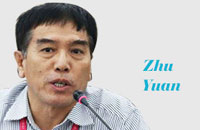
The author is director of the Hainan-based China Institute for Reform and Development.
(China Daily 01/19/2012 page8)
 New type of urbanization is in the details

Copyright 1995 - . All rights reserved. The content (including but not limited to text, photo, multimedia information, etc) published in this site belongs to China Daily Information Co (CDIC). Without written authorization from CDIC, such content shall not be republished or used in any form. Note: Browsers with 1024*768 or higher resolution are suggested for this site.
License for publishing multimedia online 0108263 Registration Number: 130349