Spring exodus shows need for hukou reform
Updated: 2012-01-12 08:06
By Huang Xiangyang (China Daily)
|
|||||||||||


With the curtain rising on the Spring Festival peak travel period, the largest human migration in the world is under way. But for many of those planning to celebrate the Lunar New Year with their families the journey home is proving to be harder than ever.
In a span of 40 days, prior to and after the upcoming Spring Festival holiday, an unprecedented 3.1 billion trips will be made throughout China - by road, railway, water and air.
Millions upon millions of migrant workers will spend time and money trying to purchase a train ticket home. They are willing to endure any hardship to be reunited with their families after a year of hard work away from their homes and even standing room only will do.
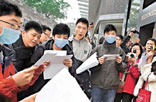
The sufferings migrant workers endure to get a train ticket during the Spring Festival period was brought into the media spotlight earlier this month, when Huang Qinghong, a migrant worker from Chongqing, wrote a letter of complaint to the Ministry of Railways after he failed to get a train ticket after waiting in line for days at the railway station. Eventually, local media provided Huang a free ticket to fly home.
His story raises the question, how much more can be done to help those who are not as lucky.
A national online and telephone booking system, which requires purchases be made with a personal identity card, has been launched this year in a bid to prevent crowds of ticket buyers from bursting the nation's stations at their seams and to prevent scalpers from hoarding tickets. But many migrant workers find themselves in a disadvantaged position because they don't know how to use a computer or have access to one, and those who try to book via the telephone find the lines are often busy.
For many migrant workers trying to get a ticket this year is like trying to win a lottery, as the old guarantees of getting a ticket, brute strength and endurance, are no longer valid with the introduction of the online and telephone ticket-buying system.
Some migrant workers are now finding it so hard to get a ticket they are complaining that they have been "deprived of the right to buy a train ticket".
I am not against the new move by the Ministry of Railways, which is under tremendous pressure to ensure everyone gets a ticket despite the overwhelming numbers. But although it might be easier said than done, a few adjustments might make it fairer.
For example, tickets sold online, through telephones and ticket windows could be rationed equally, so that people with different education backgrounds and skills can have an equal opportunity to get the tickets of their choice.
However, what is really needed is reform of the household registration system, or hukou, so that migrant workers can settle with their families in the cities where they work. Although hukou reform has been piloted in some cities, it is still hard for migrant workers to settle in cities - where they have often toiled for years - given the government restrictions on education, housing and healthcare.
But the nation owes a debt to these migrant workers. They work on construction sites and in factories. They build roads and bridges. They work as waitresses and domestic helpers. They serve us in shops. They are the doers, the risk-takers and the makers of things. They are the sinews on the muscle of China's economic might.
So let's start by paying respect to our migrant workers and treating them like equal human beings. I have heard too many stories about their sufferings, ranging from unpaid wages, workplace accidents, random evictions from temporary homes, and the closure of their children's schools. It is time to put an end to this.
I would also like the first day of the Lunar New Year to be a thanksgiving day for the country's 200 million migrant workers.
The author is a senior writer with China Daily.
(China Daily 01/12/2012 page8)