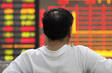
The global financial market has deteriorated severely over the past few months. The whole world is pondering how to respond to the financial turmoil fuelled by fears over eurozone's debt crisis and poor economic performance on both sides of the Atlantic.
On the other hand, China has the world's largest foreign exchange reserves, valued at more than $3 trillion, which gives it plenty of opportunities to invest overseas. To spread out the risk, China's central bank has diversified its investment over the past decade, one of which was to buy assets in euros as an alternative to US dollars. Since more than a quarter of China's foreign reserves today are in euro assets, its reaction or response to the eurozone debt crisis will have direct implications on market confidence and the European Union's relief actions.
But so far, China has played a supportive role and committed itself to painfully tackling the escalating EU debt crisis, because it realizes that its own interests could suffer if the turbulence continues.
While China has been a recipient of overseas investments over the past three decades, it has recently invested in South and East European countries, which are the worst hit by the debt crisis. China has invested from a seaport in Greece to a chemical company in Hungary, and the governments of these countries have appreciated its gesture.
But the EU is aware of China's increasing concern over the effectiveness of European efforts in handling the debt crisis and stabilizing the market. China has expressed its frustration over the mixed messages from and perceived indecision of the 27-member bloc.
French President Nicolas Sarkozy and German Chancellor Angela Merkel have been on the frontline to devise a EU rescue package, and the former is keen on getting China's support to boost the Franco-German leadership in solving the crisis. As the current president of G20, Sarkozy is also keen on getting China's backing to push for global financial market reforms and restore confidence in the eurozone.
During his visit to China last month, Sarkozy stressed that China's role in G20 and global economic recovery was "essential". France has been publicly lobbying China's support in taking forward the priorities of France's G20 presidency. For instance, Sarkozy opened a workshop on the reform of the international monetary system held in Nanjing, Jiangsu province, earlier this year. China welcomed the French initiative as it hoped to use the opportunity to increase its weight and visibility in the international decision-making process. Also, China has been active in promoting G20 as the main platform for discussing global economic governance.
Founded in 1999 by the 20 major economies of the world, G20 comprises both industrialized and emerging countries, which account for two-thirds of the world's population, 90 percent of its GDP and more than 80 percent of its trade. From China's perspective, the idea of combining the views of G8 and developing countries is more representative. Thus it is not surprising that China has welcomed the G20 process from the beginning and its attitude toward it has been positive.
Compared with G8, China views G20 as a more legitimate and inclusive process. Besides, China's active participation in G20 is in line with its changing global view from multi-polarity to multilateralism.
Furthermore, Sarkozy's visit to China was important for French politics, too. The diplomatic tension with China in 2008 put France's economic interests at stake while other countries continued to benefit economically from the strained bilateral relationship. Realizing this, Sarkozy has been eager to rebuild France's relationship with China, especially to intensify commercial ties and increase French exports to China.
So far, Sarkozy's reconciliation efforts have been fruitful, because a number of new agreements and commercial contracts have been signed after 2008, and France successfully lobbied China to get Christine Lagarde, former French finance minister, elected as the managing director of the International Monetary Fund (IMF) earlier this year.
With an unpredictable French presidential election scheduled for next year, complicated further by former IMF chief Dominique Strauss-Kahn's legal fiasco in the US, Sarkozy desperately needs to boost his popularity at home if he wants to be re-elected.
While Sarkozy's controversial domestic reform and immigration policies will remain the highlights of the election campaign, his preoccupation and role in various international affairs from the Libyan crisis to the G20 presidency will also be scrutinized. Therefore, having good relations with China could potentially improve Sarkozy's international profile and bear significant political fruits for his re-election efforts.
The author is a professor at ESSCA School of Management, Angers, France.
(China Daily 09/17/2011 page5)
 New type of urbanization is in the details

Copyright 1995 - . All rights reserved. The content (including but not limited to text, photo, multimedia information, etc) published in this site belongs to China Daily Information Co (CDIC). Without written authorization from CDIC, such content shall not be republished or used in any form. Note: Browsers with 1024*768 or higher resolution are suggested for this site.
License for publishing multimedia online 0108263 Registration Number: 130349