Veteran journalist and analyst of international organizations and affairs Chakravarthi Raghavan argues that the spreading economic crisis in Europe is indeed a valid reason for a non-European to head the IMF.
In the 1980s, when democratization of international institutions was on the agenda, the United States and Europe argued that since the developing countries are borrowers, they cannot be allowed to control the IMF or World Bank, Raghavan told the IPS press agency. "This logic applies here. No European should be allowed to head the IMF" now, he said. The IMF's rescue packages for Europe have become efforts to protect the interests of French and German banks which are major creditors and bond holders of Greece, Portugal and Spain.
The outrageous demand by Europe that it must continue to monopolize the IMF's top post is a clear case of double standard, especially when Western countries are trying to "teach the principles of democracy and meritocracy" to developing countries.
Despite this, Europe is likely to succeed because of the undemocratic decision-making system in the IMF, as is the case in the World Bank, where European countries hold more than 30 percent of the votes, the US 16.7 percent, Japan 6 percent and Canada 3 percent. If developed countries unite under a single candidate, they will get their way.
Still, it will not be a guaranteed or even an easy win for Europe. One reason is that public opinion (including that of Western civil society) finds European monopoly indefensible and outrageous in the modern world. A group of NGOs have called for a fair, transparent and merit-based process for selecting the next IMF chief.
Many developing countries recently called for an open and democratic selection process for the heads of the IMF and World Bank. Developing and emerging countries together control 44.7 percent of the votes, and the IMF chief must get 85 percent of the votes.
At a meeting in April, ministers of the G24 (a group of developing countries that operate in the IMF and World Bank) repeated their call "for an open, transparent, merit-based process for the selection of the president of the World Bank and the managing director of the IMF, without regard to nationality". They also called for "concrete actions and proposals to be put forward to guarantee this change".
While the developed countries have a majority of the voting rights, the developing countries can theoretically block the candidate put up by Europe or other developed countries.
The reality is that the developed countries tend to unite behind a candidate from among them, while developing countries have not been able to come up with a single candidate of their own who they could support en bloc.
Though the selection of a new IMF managing director is of immediate importance, more important is the reform needed in the IMF's policies and operations.
A South Centre paper, authored by chief economist Yilmaz Akyuz, points to its failure in preventing financial crises, which is its main task. The change of IMF's leadership is a good opportunity to discuss the weaknesses of the IMF and to reform its policies.
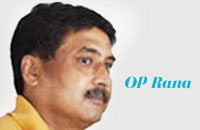
The author is executive director of the South Centre, a think tank of developing countries, based in Geneva.
(China Daily 05/25/2011 page9)
 New type of urbanization is in the details

Copyright 1995 - . All rights reserved. The content (including but not limited to text, photo, multimedia information, etc) published in this site belongs to China Daily Information Co (CDIC). Without written authorization from CDIC, such content shall not be republished or used in any form. Note: Browsers with 1024*768 or higher resolution are suggested for this site.
License for publishing multimedia online 0108263 Registration Number: 130349