|
They were probably cargo in the vessels buried along the canal. Many other types of porcelain were also discovered, believed to be for export since their design and aesthetics were different from the styles popular in China at that time. "It's very intriguing to discover the porcelains here in the Grand Canal of China," says Wang Hongwu, curator of Huaibei's Sui-Tang Grand Canal Museum.
"While the canal was primarily built to transport grain, a lot of ceramics were carried through it. Many of them could still be found in the relics. We could get a glimpse of life back at that time through their designs and patterns. The number of ceramics discovered also reflects the large volume of exports at that time,"Wang says.
Since the 1980s, villagers in these two cities have found shards of porcelain and whole items in fields. In 1999, archeologists began excavation in Liuzi village, finding eight sunken vessels from the Tang Dynasty. Countless shards were scattered along what was confirmed to be the canal route. Discovery of boats and ceramics confirmed the canal passed through the region, which had been debated before the excavation. The discoveries were listed among the 10 most important archeological discoveries of 1999.
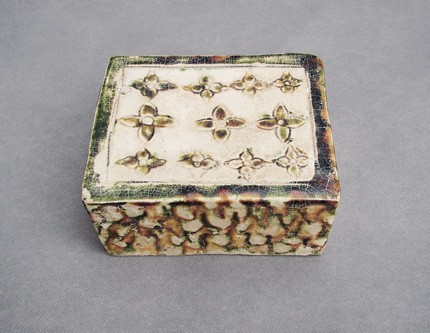 |
| Ceramic shards lead to discovery of canal |
"In the Tang Dynasty, the country quickly became stable and rich and people came to appreciate a glamorous lifestyle and artistic works," Wang explains. They used cheap and practical ceramic items, such as pots, jars and toys, as well as delicate ritual vessels and art pieces. Even many practical items had grace and style. The development of the porcelain industry was rapid to meet demands and soon reached its peak.
In the following Song Dynasty, the general aesthetics became more classy and intricate. The increasing demand stimulated the further development of the ceramic industry. When the industry reached another peak, the Grand Canal was also at its prime. It was later buried by war and time. Liuzi village was a key dock along the canal where cargo was loaded and unloaded and sailors could rest. Liuzi was near Henan and Shandong provinces, where there were at least 160 kiln sites. It was simple to transport porcelain to the canal where they were loaded into successively larger vessels on a journey around China and overseas.
|