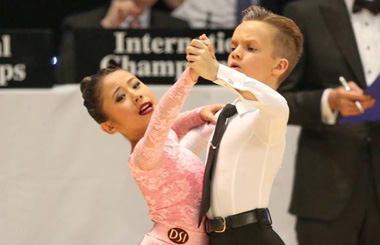
Public dancing holds us together, participants say
 |
|
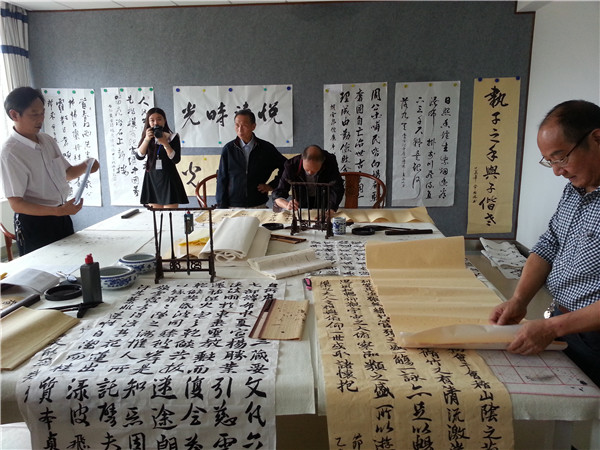
Retirees learn calligraphy at a residential cultural center in Changsha. [Photo by Deng Zhangyu/China Daily] |
"This year the system of building public cultural services has become a national-level matter," says Cui Lei, an officer at the Ministry of Culture. "Besides government funds, we encourage public donations."
In the city of Yulin in the Guangxi Zhuang autonomous region, a cultural center consisting of a basketball field, a library and a stage for such dancing is a must-have for every village. Most were funded by rich villagers, a few donations being as high as 1.6 million yuan, says Lai Chunlin, director of information office of Yunlin.
Funding cultural institutions has become a way of flaunting wealth, he says. This matter of pride transcends individuals, with villages-many of whose inhabitants often have the same surname-vying with one another to be connected to the biggest cultural centers, dance troupes and most successful sports teams.
As night falls, Yulin is transformed into a big stage. Whether it is in some tiny open space or an expansive square, until 10 pm local opera shows, music performances and square dancing by troupes of elderly women will hold sway.
As long as, say, 20 square meters or so of space is available, there will be public performances, and most of them will be dancing, Lai says.
Of course, not every place in China is as rich as Yulin, and that is when government funding comes into play.
Anyuan, in Jiangxi province, is a case in point. The authorities of this underdeveloped county say it has annual revenues of about 1.3 billion yuan, with almost half the amount being spent on cultural infrastructure in the past few years. The result is an attractive theater and a spacious stadium that are the fanciest buildings in the county. The movements in the dancing here imitate workers picking tea leaves.
In fact, this folk dance is so deeply rooted in local culture that most local people seem to be able to dance, including many government officials who practice early in the morning or in the evening after dinner.
Not only does almost every village have a stage for square dancing, but the county is also building swish museums and libraries that can hold their own with any others from elsewhere in China.
"People are spending a lot of their time dancing and engaging in cultural activities, so there is less gambling and personal feuds," says Pan Shaoning, a local government officer. "At the same time, the aged and the retired have things to do."