Taste and local culture
 |
|
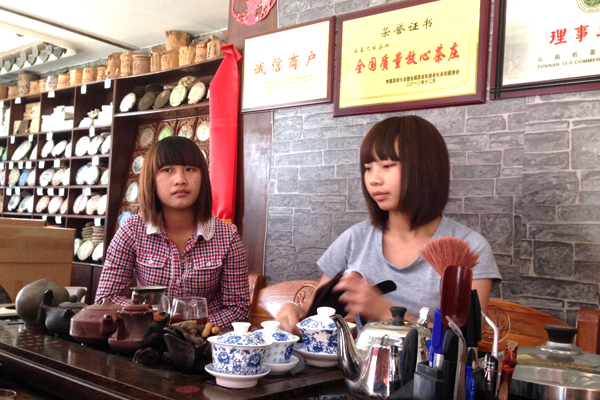
In Yunnan, wholesale tea shops often have a table of tea paraphernalia ready for clients who want to try the teas before buying. |
The changes are continuing, and Xie says people no longer drink to quench the thirst of the body. They drink to satisfy the thirst of the spirit.
"Tea goes best with a calm state of mind. You have to have serenity to feel the nuances of the taste. You have to be sober to be able to mull over what you have experienced. You can only understand the Tao of the world with an unhurried, patient mind."
|
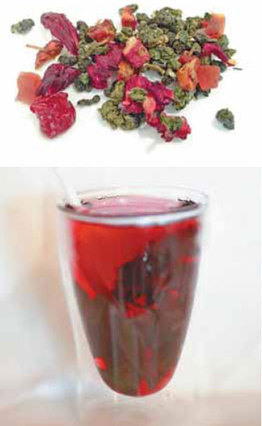
In summer, tea sommeliers concoct their own infusions, using tea and a mix of dried fruits and berries. |
At Tianjin's retro-chic Astor Hotel's Victorian Garden, guests can indulge in afternoon tea with a difference. They can choose from a comprehensive range of Western or Chinese brews.
On hand to help them is Wang Jing, the tea expert seconded from the hotel's tea supplier.
"Tea drinking has shifted from being a auxiliary activity to being a main attraction in recent years," she says.
"We see the art of tea drinking flourishing day by day. It has gone beyond being a beverage to an art form.
"The Astor arranges a tea ceremony at least once a week, presented by skilled tea sommeliers. Foreign visitors and guests are attracted by the demonstration, and they gather around and shoot questions at us."
Tea lovers are also becoming more particular about the quality and purity of tea.
"A guest from Taiwan ordered oolong tea and was dismayed by a tainted nuance in the tea, probably caused by careless handling during the freighting process. He did not like the other types of tea we offered for compensation until he tasted the dahongpao, a rock tea from the Wuyi Mountains in Fujian province." Dahongpao is a rare and extremely expensive tea.
The rise in appreciation for Chinese tea means the welcome drink in international hotels these days may be a hot pot of good tea.
Helen Chen, from the marketing department of Starwood Hotels and Resorts, tells us that a recent survey shows that the domestic market accounts for 60 to 70 percent of room occupancy.
With that in mind, guests at the Astor are greeted with a cup of tea as soon as they step through the door. It works with the foreign visitors, too, because tea is so much a part of Chinese culture.
The role of the tea sommelier is set to grow in China as the country proudly asserts its own identity and shares it with visitors.
It pays to know your tea.