Ancient Tibetan tea returns to market
 |
|
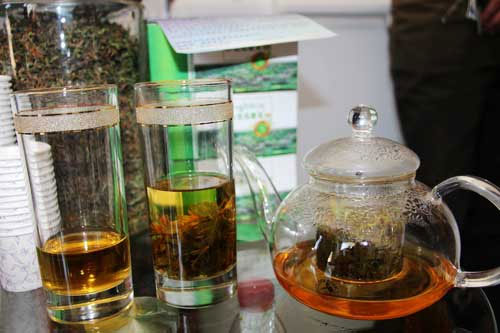
Photo shows the Padma wild Tibetan tea. [Photo/mzb.com.cn] |
"Tibetans would rather not eat rice for three days but have to drink tea every day". Though the proverb is short, it reflects the important role of tea olays in Tibetans' daily life.
Well known for people's health and cultural connotation, Tibetan tea, when mentioned, would remind most people of southwest China's Sichuan and Yunnan province.
However, according to mzb.com.cn, the wild Tibetan tea is also produced in northwest China's Qinghai province.
The Padma wild Tibetan tea, produced in Padma County,the Golog Tibetan Autonomous Prefecture of southeastern Qinghai province, boasts a long history dated back to ancient China's Tang Dynasty (618-907 A.D.) and Song Dynasty (960-1279 A.D.), according to the records in The History of Golog Dzong (Dzong is an administrative unit at primary level in old Tibet, which is approximately equal to "county").
However, along with the missing of literary records, Padma Tibetan tea has been fading away to let most people think that Qinghai province doesn't produce tea at all. Fortunately it was found that Qinghai had the original ecologic wild Tibetan tea by accident last year.
Last year, nearly two tons of tea was picked and produced in Padma county. Yet, the Padma Tibetan tea was still known by very few people due to the lag in tea making technique and the lack of advertisement.
The just concluded trade talk of Qinghai province from June 10 to 13, 2013 where many visitors were attracted by the tea's reputation gives it a chance to self-market. The popularity of the tea itself boosted its production, and the local producers planned to improve the industry further to make the authentic Tibetan tea of Qinghai province return to people's view.
The Padma Tibetan tea is dark green tea, featured with rosy color, authentic flavor, as well as smooth and sweet taste, which are summarized into four words: red, strong, classic and mellow.
With high tea polyphenol content, the tea has good healthcare functions and can strengthen people's immune system. Since the major food source was meat in the past, tea was the best way for the plateau nomads to apprehend vitamins. Thus tea became essential life element among pastoral peoples. For Tibetans, tea is the major material to make buttered tea and sweet tea, which are the two most characteristic and well-known Tibetan drinks.
According to historical records, local nomads used beef, mutton, milk products and Tibetan teas to trade for other necessities of life during ancient days, when trades were flourished and diverse cultures were integrated here.
It is said that locally produced dark tea sold very well even in the Tang and Song dynasties in inter-regional trades, and was transported to not only Tibetan inhabited areas in Sichuan province such as Aba, Zamtang and Maerkang, but also supplied to Tibet through the Sexi ancient road, the then only channel of Padma to transport tea outward.
?
|
|
|