At Palace Museum, the world mulls heritage protection
 |
|
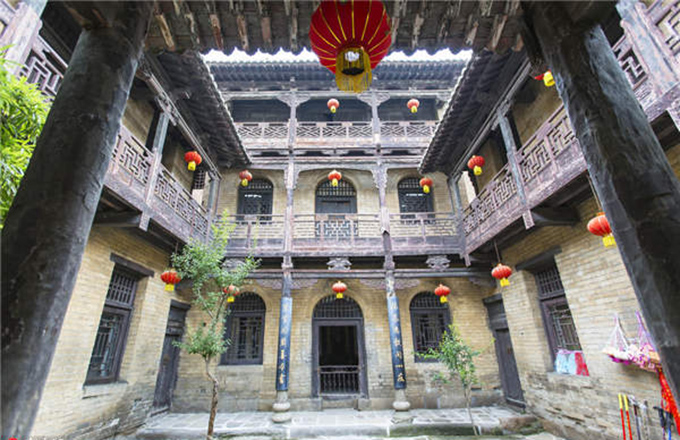
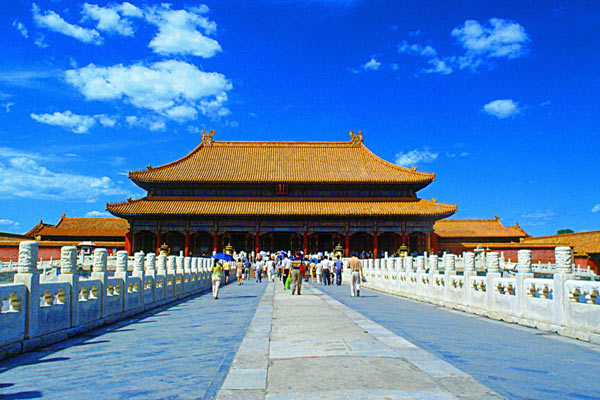
The Forbidden City, the culmination of the two-thousand-year development of classical Chinese and East Asian architecture, has been influential in the subsequent development of Chinese architecture, as well as providing inspiration for many artistic works. [Photo/IC] |
When Stefano De Caro first saw the Palace Museum, or Forbidden City, in the movie "The Last Emperor" in the 1980s, he thought, "this is China."
After visiting the palace complex, however, it dawned on him that there was much more about China.
"The Palace Museum has over the years impressed me on many more perspectives," De Caro, director-general of the International Center for the Study of the Preservation and Restoration of Cultural Property (ICCROM), told Xinhua at the 2016 Ancient Civilization Forum, which was held at the Palace Museum from Wednesday to Thursday.
For example, the restoration work is fantastic, De Caro said.
Today, the Palace Museum has a conservation team of more than 100 professionals, who are tasked with restoring and maintaining the museum's rich collection, which includes ancient calligraphic works, paintings, time pieces and bronze items.
The Palace Museum is home to the world's largest ancient Chinese calligraphy and painting collection. While many are hundreds of years old, some were born over a millennia ago.
The museum's noteworthy efforts in conserving cultural treasures can be seen from "Five Oxen," a painting scroll by 8th century artist and prime minister Han Huang.
Oxen represent agriculture as foundation of ancient China. Han, who was active during the Tang Dynasty, so elaborately depicted five oxen that their muscles, bones and hairs are as vivid as the living animals from which he drew inspiration.
The painting, which is the world's oldest surviving Chinese paper painting, was lost during the warring period in 1900.
The central government, at great financial cost, recovered the painting after it reappeared in Hong Kong in the 1950s. When the painting was returned to the Palace Museum, it had more than 200 holes and was stained with dirt and mould.