Years of study set for Tibet plateau
 |
|
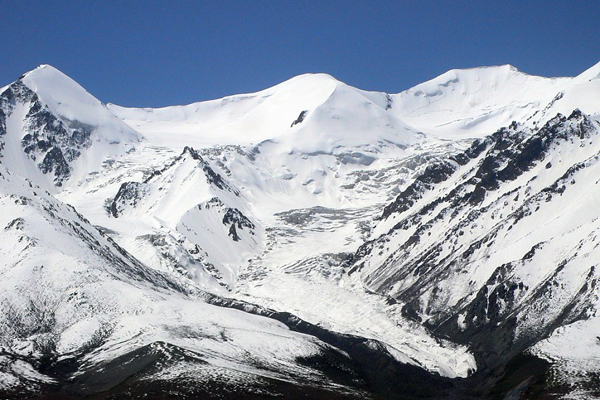
A glacier in the Qinghai-Tibet Plateau. [Photo/VCG] |
China has launched the second comprehensive expedition to the Qinghai-Tibet Plateau to paint a fresher picture of the ecologically fragile region.
The expedition, led by the Chinese Academy of Sciences, will analyze the impact of environmental change and provide suggestions for building the Third Pole National Park in the area, according to the academy. The first such expedition was conducted from the 1970s to the 1990s.
The Qinghai-Tibet Plateau, mainly located in southwestern China, is referred to as the world's Third Pole. It covers an area of about 2.5 million square kilometers, with an average altitude of 4,000 meters, according to official data.
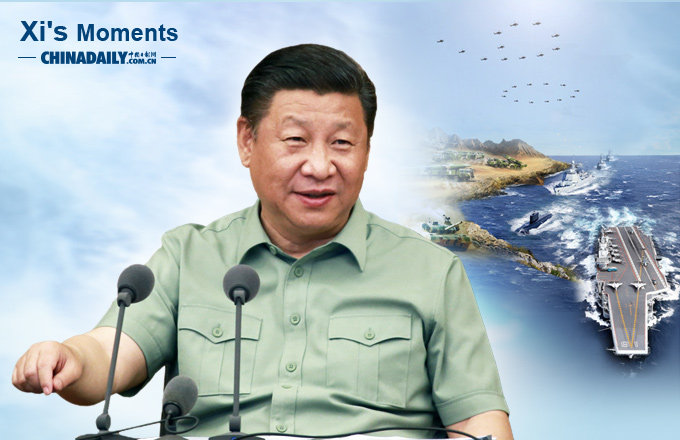
The latest expedition will have a significant impact on the plateau's sustainable development and the world's ecological environmental protection, President Xi Jinping said in a congratulatory letter addressed to the research team on Saturday.
The plateau is an important ecological safety barrier and strategic resource reserve. The research team should focus on problems related to the carrying capacity-h(huán)ow many people can live there-of the resources and the environment, disaster risk as well as green development on the plateau, Xi said in the letter.
Vice-Premier Liu Yandong read the letter addressed to the scientists, young students and support staff members at a ceremony in Lhasa, capital of the Tibet autonomous region, to officially launch the expedition.
According to the academy of sciences, the expedition will last five to 10 years. One of the stops will be Serling Tso, a 2,391-sq km lake that was confirmed to have replaced the Buddhist holy lake Namtso as Tibet's largest in 2014. The lake's rapid expansion is fueled by melting glaciers and increased rainfall, scientists concluded.
The academy plans to send more than 100 scientists to the lake area and to the origin of the Yangtze, China's longest river. They will make a comprehensive survey of the plateau glaciers, climate change, biodiversity and ecological changes, Yao Tandong, director of the academy's Institute of Qinghai-Tibet Plateau Research, said in June when the research team was preparing for the expedition.
China launched its first comprehensive scientific expedition to the plateau in the 1970s, covering more than 50 disciplines including geologic structure, prehistoric life, geophysics, climate, zoology and botany.
Yao said the new round of research will focus on "changes". Great changes have taken place in the plateau's resources and environment since the first scientific expedition, and the team needs further research to find out ways to cope with these changes, he added.