Smog said to reduce water pollution
Chinese scientists have discovered that smog can indirectly reduce water pollution.
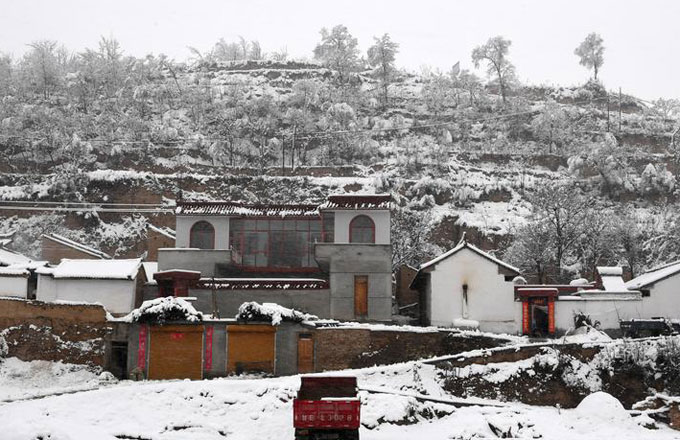
Chen Fahu, research director of Key Laboratory of Western China's Environmental Systems at Lanzhou University, discovered that a high level of man-made aerosol - a colloid of particles or droplets in the air, such as smog - has weakened the summer monsoons in the Chinese Loess Plateau, an elevated region in Northwest China famed for its mineral-rich, but highly eroded, soil.
The weakened monsoons have led to less rainfall in the region and therefore less soil has been washed into the mountain lakes and rivers, reducing eutrophication - a form of water pollution in which excessive nutrients, mainly phosphates and nitrogen, cause algal blooms - according to Chen's published findings in Nature Climate Change, an international science journal, earlier this month.
Reducing aerosol levels - a goal of anti-smog campaigns - might strengthen monsoons, "increasing eutrophication and causing algal blooms, absorbing oxygen from the water, blocking out the sun and polluting the water, leading to damaged aquatic ecosystems", Chen said.
It could cause billions of yuan's worth of ecological damage and threaten fresh water resources in the region, he said, adding that a large portion of the Yellow River - China's second-longest river - runs through the plateau.
"This is troublesome because it shows that human activities have changed the climate so much that even undoing our damage now could have consequences," Chen said.
The purpose of the research was not to promote smog, he added, but to "warn officials to be aware of potential side effects when cutting emissions, and develop more comprehensive anti-smog plans".
The Loess Plateau had strong summer monsoons and eutrophication issues for more than 1,000 years, Chen said, "but aerosol released from factories and cars in the past 50 years have reversed these natural phenomena".
The strength of summer monsoons is affected by the difference in surface temperature between the sun-exposed land and the cooler sea - the greater the difference, the stronger the monsoons.
The increased aerosol levels act as an "umbrella that blocks the radiation from the sun, causing the land not to heat up as much, therefore reducing the difference in temperature and weakening the monsoons", Chen said.
"This goes to show how complex and fragile our ecosystem really is, and protecting it should be a priority," he added.