Stronger steps on safety of food set
China still faces severe challenges to ensure food safety, despite improvements in recent years, and authorities will maintain a zero-tolerance attitude toward violations of laws, the national food safety watchdog said.
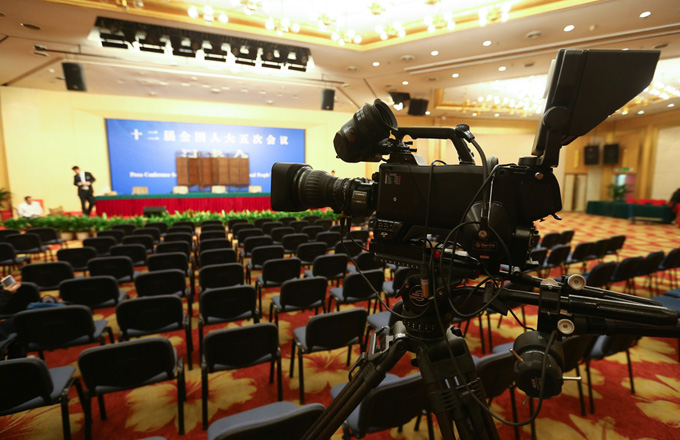
"A number of problems still exist in food safety, and supervision still falls short of public expectations," Bi Jingquan, chief of the China Food and Drug Administration, said at a news conference on Monday. "We will punish irregularities with the most severe measures this year to prevent and control food and drug risks."
Last year, the administration organized inspections covering 257,000 samples of food available on the domestic market, an increase of about 50 percent over 2015, Bi said.
The inspections found that 96.8 percent of the sampled food met standards, the same level as in 2015 and an increase of 2.1 percentage points over 2014, he said.
Food safety authorities and public security departments across China punished violators in 181,000 cases last year - an effective deterrent to such violations, according to Bi.
Despite improvements, food safety risks are still high, including excessive use of pesticides and antibiotics for husbandry and poultry, excessive levels of heavy metals in food caused by environmental pollution, and the use of illegal additives, he said.
Food safety authorities still face many obstacles to ensuring safety, particularly at the grassroots level, he said.
"Supervision is weak at the grassroots. Professionals, technicians and facilities are lacking," he said.
"While acknowledging the gaps, we must keep a zero-tolerance attitude toward violations of food safety laws to ensure food safety at every link, from the farmland to dishes on the table."
Food safety has been a concern for many Chinese families, in particular after the melamine scandal of 2008, when thousands of infants were sickened after ingesting melamine-tainted infant formula made by Sanlu Group. Melamine, a chemical used in plastics, was used to make it appear that the products contained more protein.
"Many causes contribute to food safety problems, such as pollution of soil, air and water, as well as overuse of fertilizers and antibiotics," said Li Chunhua, a researcher at the Chinese Academy of Social Sciences' Institute for Urban and Environmental Studies.
More than 60 percent of underground water in China is of "poor quality", according to a 2016 report by the Ministry of Land and Resources.
Some other causes, such as inadequate supervision and violators paying too little for violations, also contribute to the safety problems, he said.