BEIJING - China's commitment to purging corruption did not cease when the country's political high season began this month.
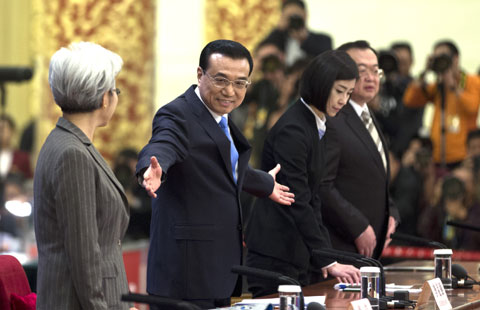
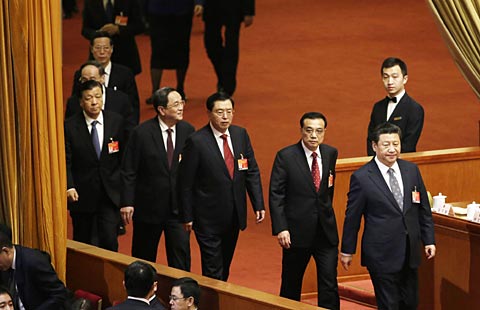
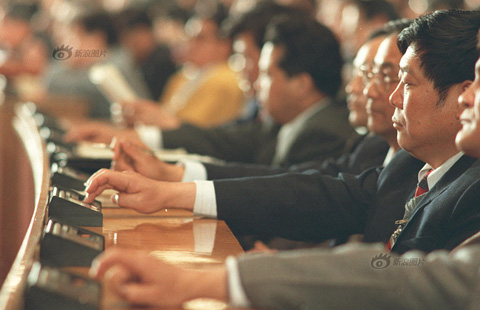
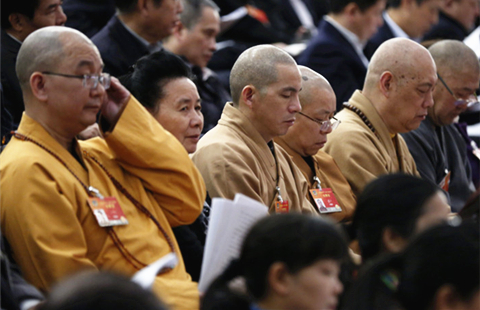
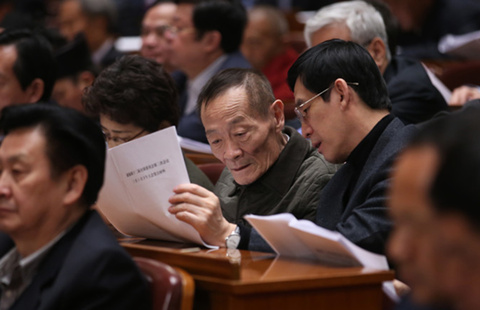
The annual sessions of the National People's Congress (NPC), the top legislature, and the Chinese People's Political Consultative Conference (CPPCC), the top advisory body, kicked off last week to discuss ambitious plans for the new year.
However, it was widely believed by political observers in China that news about corrupt officials was unlikely to be published during such major meetings as the "two sessions" or the Communist Party of China (CPC)'s national congress.
Evidence of such occurrences may be found in the past, but is no longer the case since the current leadership took office in 2012 and declared a high-profile anti-graft crackdown that has ensnared top generals and party officials.
Much to the public's surprise, military authorities released a list of 14 generals convicted of graft or placed under investigation on March 2, one day before the opening of the CPPCC session.
Those under investigation include Guo Zhenggang, deputy political commissar of the Zhejiang provincial military area command, the son of Guo Boxiong, the retired former vice chairman of the Central Military Commission.
The exposure of military corruption did not come alone. China's top anti-graft body announced that Jing Chunhua, a senior official in Hebei Province, has been put under investigation for "suspected serious discipline and law violations" on March 3, the first day of the CPPCC annual session.
Meanwhile, local anti-graft bodies continue to name corrupt officials as the political sessions continues.
Whether it is during the major fourth plenary session of the 18th CPC Central Committee held last October or the ongoing "two sessions," China's anti-graft drive has maintained momentum, investigating and punishing corrupt officials as usual.
The authority's fight against high-ranking "tigers" as well as lowly "flies" has showed the drive is not merely a sweeping campaign. Instead, the leadership is pushing a permanent mechanism to limit power and curb corruption.
China plans to develop national legislation to fight corruption, according to a report delivered by top legislator Zhang Dejiang on Sunday.
The country will work out revisions to the Law on Administrative Supervision, said Zhang, chairman of the NPC Standing Committee, while delivering a work report at the annual session of the top legislature.
The anti-graft legislation should be introduced as quickly as possible and the system of sanctions and prevention improved with a goal of being a mechanism that means "officials dare not, cannot and do not want to be corrupt," according to the decision.
Furthermore, the top legislature is mulling harsher punishments for those committing crimes of embezzlement and bribery. Heavier penalties will be imposed on those offering bribes, according to a draft amendment to the Criminal Law submitted to the NPC Standing Committee for a first reading in October last year.
Related Stories
Copyright 1995 - 2015 . All rights reserved. The content (including but not limited to text, photo, multimedia information, etc) published in this site belongs to China Daily Information Co (CDIC). Without written authorization from CDIC, such content shall not be republished or used in any form. Note: Browsers with 1024*768 or higher resolution are suggested for this site.
License for publishing multimedia online 0108263 Registration Number: 130349