Chinese reporters might have felt more comfortable covering the nation's biggest political event this year as they were exposed to more and more trendy discussions by officials who usually seem detached from ordinary people's lives.

Internet buzzwords, the most popular reality shows and TV series have been frequently cited by top leaders and spokespersons on a flurry of occasions during the ongoing national legislative and consultative meetings, giving reporters handy and eye-catching headlines.
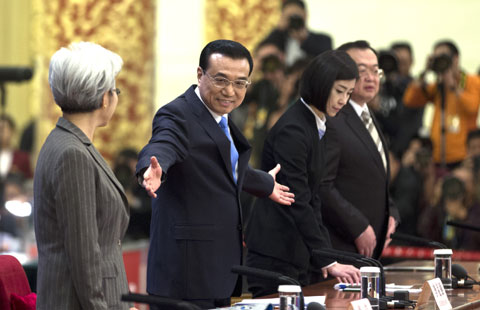
At the curtain-rising news conference of China's top political advisory body on March 2, spokesman Lyu Xinhua ignited a media craze by saying everyone is "headstrong" in their attitude to uncover "tigers", senior-level corrupt officials, if there are any.
The trendy phrase stumped Lyu's interpreter for a bit. She stopped interpreting and asked the spokesman to confirm what he meant, triggering laughter in the press hall and heated discussions among Chinese.
Chinese reporters' laughter could be believed as a kind of acknowledgment of the spokesman's people-friendly approach, but for many foreign reporters at the news conference, even the translation-"capricious"-remained confusing.
Even days after the news conference, I overheard three foreign reporters discussing why the word was so special in China.
More than 1,000 registered reporters this year are from Hong Kong, Macao, Taiwan and foreign countries, accounting for one-third of the total. Foreign reporters' interests in China have gone far beyond the country's diplomacy.
Topics including anti-graft, pollution, GDP growth and family planning policy have been widely reported by global media and are seen to have a global influence.
The scope of topics that interest them are so wide that it is kind of inevitable for them to not fully understand something too local or too trendy.
The most recent example that swept the English media is "duang", a spoken word without any Chinese character originally used by kung fu superstar Jackie Chan in a commercial and whose meanings still vary from person to person.
BBC said you can use it as an adjective to give emphasis to the word that follows it. A kitten might be "duang cute", for example.
AdAge, publishers in the advertising field, said nobody can agree on what it means exactly. Some use it like "boing boing", others use it to mean something enhanced by special effects.
I personally bet the word "duang" will disappear from our ever-changing society and be replaced by new cyberwords before everybody can reach a consensus on its meaning.
The same thing is happening with the political discourse. Down-to-earth phrases used by high-level officials did send a fresh breeze through politics and narrow the distance between people's daily lives and State affairs, but the most important thing for a news conference is the efficient message delivery. If foreign reporters, or even some Chinese ones, fail to get the point immediately, please rephrase it.?
Related Stories
Copyright 1995 - 2015 . All rights reserved. The content (including but not limited to text, photo, multimedia information, etc) published in this site belongs to China Daily Information Co (CDIC). Without written authorization from CDIC, such content shall not be republished or used in any form. Note: Browsers with 1024*768 or higher resolution are suggested for this site.
License for publishing multimedia online 0108263 Registration Number: 130349