China will rely more on new technologies in future to maintain the vitality of the manufacturing sector, the head of the industry's watchdog said on Friday.
The country is already the world's largest manufacturer, and aims to become one of the strongest in the next 10 years, according to Miao Wei, head of the Ministry of Industry and Information Technology.
The adoption of the "Internet of Things", a technology that enables a wide range of machines and devices to be interconnected, and the introduction of robots are major ways for Chinese factories to improve their global competitiveness, Miao said.
"We are relying on the 'Made in China 2025' strategy to bring down operating costs and boost efficiency and innovation in the manufacturing sector," he said, adding that the 7 percent growth target will be a "very high bar" for traditional manufacturing enterprises to achieve without support from new technologies.
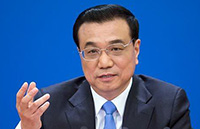
Premier Li Keqiang said on Thursday that China will push forward the integration of modern IT, including cloud computing and big data, with traditional manufacturing segments.
"Manufacturing is traditionally a strong area for China," Li said in the annual Government Work Report. "We will implement the Made in China 2025 strategy; seek innovation-driven development; apply smart technologies; strengthen foundations; pursue green development; and redouble our efforts to upgrade China from a manufacturer of quantity to one of quality."
The slow pace of adoption of new technology is harming the quality of Chinese manufacturing.
The country has 23 robots for every 10,000 workers compared with a figure of 273 in Germany, Miao said. In Japan and South Korea, the figure is approaching 300.
The low adoption rate for high technology reduces the competitiveness of made-in-China products on global markets.
"While the German government is introducing ideas for building Industry 4.0, many enterprises in China still need to fill the gap between Industry 2.0 and Industry 3.0. The deficit is obvious," Miao said.
Industry 4.0 is a concept of value chain organization in which sensors are installed in machines so that every part of the chain can create, transfer and share statistics, boosting efficiency and product quality. Industry 3.0 and 2.0 are earlier levels of industrial development.
The ministry pledged to encourage local innovation and introduce policies that favor companies willing to adopt more new technology.
gaoyuan@chinadaily.com.cn
Copyright 1995 - 2015 . All rights reserved. The content (including but not limited to text, photo, multimedia information, etc) published in this site belongs to China Daily Information Co (CDIC). Without written authorization from CDIC, such content shall not be republished or used in any form. Note: Browsers with 1024*768 or higher resolution are suggested for this site.
License for publishing multimedia online 0108263 Registration Number: 130349