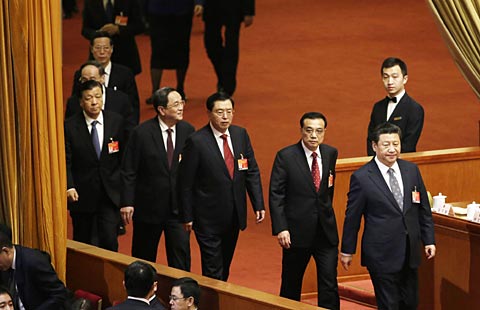
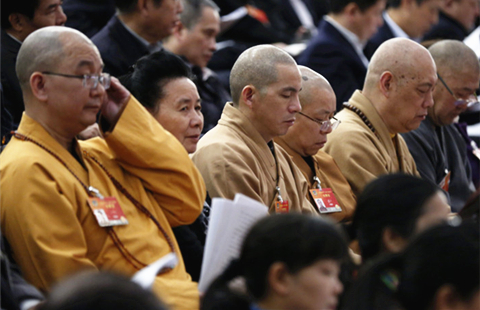
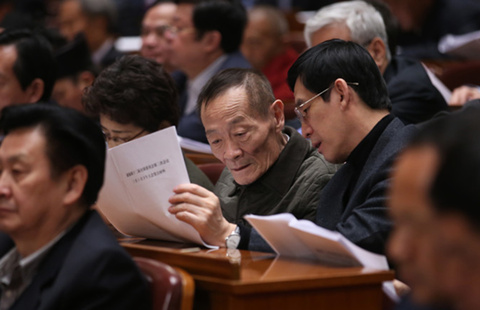
The legislative powers of the National People's Congress (NPC) and its Standing Committee are defined by the Constitution of China.
According to the Constitution, the NPC exercises the following legislative powers:
-- To amend the Constitution (In China, amendments to the Constitution are to be proposed by the Standing Committee of the NPC or by more than one-fifth of all deputies to the NPC and adopted by a majority affirmative vote of more than two-thirds of all the deputies);
-- To enact and amend statutes concerning criminal offenses and civil affairs;
-- To enact and amend statutes concerning State organs, which generally refer to various kinds of organic laws;
-- To enact and amend basic statutes concerning other matters, such as laws on election, nationality and marriage.
The NPC Standing Committee exercises the following legislative powers:
-- To enact and amend statutes other than those that must be enacted by the NPC;
-- To enact, when the NPC is not in session, partial supplements and amendments to basic statutes enacted by the NPC provided that they do not contravene the basic principles of these statutes;
-- To interpret the Constitution and statutes;
-- To annul administrative rules and regulations, decisions and orders of the State Council that contravene the Constitution or the statutes;
-- To annul local regulations or decisions of the governmental organs of provinces, autonomous regions and centrally-administered municipalities that contravene the Constitution, the statutes or the administrative rules and regulations.
Related Stories
Copyright 1995 - 2015 . All rights reserved. The content (including but not limited to text, photo, multimedia information, etc) published in this site belongs to China Daily Information Co (CDIC). Without written authorization from CDIC, such content shall not be republished or used in any form. Note: Browsers with 1024*768 or higher resolution are suggested for this site.
License for publishing multimedia online 0108263 Registration Number: 130349