Comments
  Print
Print  Mail
Mail Large Medium Small
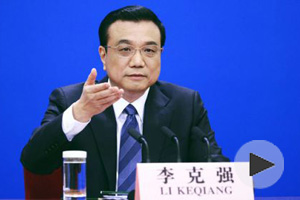
Premier Li Keqiang cited reforms as "powerful impetus" yesterday in a government work report. "Deepening reform" is enjoying high priority and they are just around the corner, or actually, on their way - a grant reform plan was launched last November at the third plenary session, including about 330 measures in 60 areas.
But maybe less attention is paid to implementation sequence of reforms, which may contribute to the collapse of the whole reform program if not appropriately dealt with. Admittedly, reform sequencing is nothing we have total control over. Notwithstanding, a thorough and comprehensive discussion is necessary, helping to notice disadvantages and possible risks beforehand. And eliminating more restrictions in one area and providing more short-run guidance in another area is a kind of sequencing, though not strictly.
Despite all the competing views and proposals related to reform sequencing, three key issues are widely accepted and worthy of discussion. The most important consensus is "economic stabilisation policy first". I'd rather refer to it as "preventing systemic risk policy". Reform is never a riskless program; reconstruction above a shaking ground is even more risky. Systemic risks in the past did not cause major concern thanks to three buffers in China's economy: high saving rate and abundant foreign exchange reserve; overall government debts; capital account control. Nevertheless, with down-trending economic growth, soaring local governments' debts, incoming of liberalization of capital account, increasing leverage ratio in private sector, and real estate bubble, risk in China has heavily shadowed the already weak world economy.
The second issue is domestic financial system, which has been given high priority in the reform agenda. Li also mentioned it as one of the major reform areas. But the one factor that is easily overlooked affects the success of it - the local government debts. People are usually more concerned about the leverage, the scale, liquidity and the efficiency of local government debts. Though these worries are true, infrastructure level in China is still low compared to other less developed countries, thus high marginal rate of return; extending duration, local governments' property and central government's guarantee also ease a lot of pain. But a less visible and worse problem is that the large-scale local governments' debts distort the financial market. One possible solution is to separate a market specific to financing infrastructure investment.
Another issue that needs really careful dealing is the capital account liberalization. A fact worth noting is that capital control may be becoming less effective in China. But most proposals by economists suggest leaving it as the last step. It makes sense considering research has shown that liberalizing capital outflow would actually increase net inflows - China has much tighter outflow policies. In the face of this, maybe a more prudential attitude should be taken toward capital account reform.
Finally, the credibility of government policy has been seen as the most fundamental feature for successful reforms. It is a tricky one as it includes public certainty about reform objectives, faith in leader's ability and the possibility of a setback. To me, the tough stand taken on corruption last year did manifest government's resolve.

Copyright 1995 - . All rights reserved. The content (including but not limited to text, photo, multimedia information, etc) published in this site belongs to China Daily Information Co (CDIC). Without written authorization from CDIC, such content shall not be republished or used in any form. Note: Browsers with 1024*768 or higher resolution are suggested for this site.
License for publishing multimedia online 0108263 Registration Number: 20100000002731