Comments
  Print
Print  Mail
Mail Large Medium Small
Suggestion from Xinjiang delegates follows deadly knife attack at Kunming rail station
A suggestion that the top legislature consider drafting a national anti-terrorism law following this month's fatal attack in Kunming has been made by deputies to the 12th National People's Congress.
 |
| 2014 two sessions |
The 60-member delegation from the Xinjiang Uygur autonomous region has made a group suggestion to the NPC, asking it to list the law in the plan for legislation.
China does not yet have an anti-terrorism law.
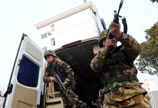
A knife attack at Kunming Railway Station, in the capital of Yunnan province, on March 1 left 29 people dead and more than 140 injured.
Police say the attack was carried out by five members of an eight-member terrorist cell led by Abudulreyim Kurban and that the attackers are terrorists from Xinjiang.
Terrorist attacks have become more frequent in China, especially in Xinjiang. According to the suggestion, an anti-terrorism law is needed urgently, as the current legal system cannot fully handle such violent crimes.
The legal framework covering terrorist crimes in the Criminal Law and its amendments targets those who commit such crimes. It stipulates harsh punishments for terrorists, but lacks effective measures to prevent or stop the crimes, the suggestion states.
It says the current prosecution procedure for terrorist-related cases is not practical, there are insufficient charges covering such crimes and current legal definitions for terrorist activities lack clarity.
As a result, most terrorist suspects in Xinjiang are often charged with offenses such as intentional homicide or arson, rather than organizing, leading or participating in terrorist activities, it states.
Many attacks in Xinjiang have stemmed from religious extremism playing a key role in terrorists' organizing cells with the aim of a jihad, or holy war, being waged through violence.
But to date there has been no related law or regulation to target and curb extreme religious activities, according to the suggestion.
The delegation suggests that the anti-terrorism law specify the roles of each department in combating terrorism. It should also include preventive measures, a warning system and crisis management steps.
More important, it needs to clearly define terrorist organizations and terrorists. It should also state how to cut funding for terrorists and curb terrorist-related activities online.
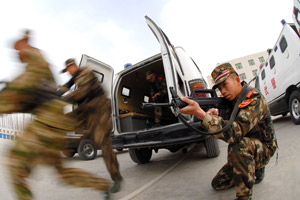
Wu Dongli, director of the Ministry of Public Security's border control bureau, said work on setting up anti-terrorism forces nationwide improved after the Beijing Olympics in 2008, but problems in integrating different forces also arose.
As a deputy from the Yunnan delegation, he suggested drafting a comprehensive anti-terrorism law.
Terrorist activities in China have become more violent in recent years and attacks have spread from areas bordering Afghanistan, Pakistan and Russia, triggering panic among the public and endangering national security, he added.
Besides building an effective legal system, a social prevention and control system needs to be set up to deal with terrorist attacks, Wu added.
Nayim Yasen, a deputy from the Xinjiang delegation and president of Xinjiang Regional High Court, also submitted a suggestion on the same issue. Xinjiang started legislative work on a regional anti-terrorism regulation this year.
Jiang Bixin, vice-president of the Supreme People's Court, said, "Besides an anti-terrorism law, current legal issues regarding terrorist-related cases could also be solved by issuing judicial interpretations that are practical and could be drafted by the Supreme People's Court."
Some deputies said the Kunming attack might speed up drafting of a national anti-terrorism law.
"It has made people realize that terrorism is very close to every one of us," said Zhu Lieyu, an NPC deputy from the Guangdong province delegation and also a lawyer.
Xu Ming, an NPC deputy and chief procurator of Heilongjiang province, said the attack will speed up the legislative process for an anti-terrorism law.
Hu Yongqi, Cao Yin and Gao Qihui contributed to this story.
 |
 |
| Xinjiang mulls anti-terrorism laws |

Copyright 1995 - . All rights reserved. The content (including but not limited to text, photo, multimedia information, etc) published in this site belongs to China Daily Information Co (CDIC). Without written authorization from CDIC, such content shall not be republished or used in any form. Note: Browsers with 1024*768 or higher resolution are suggested for this site.
License for publishing multimedia online 0108263 Registration Number: 20100000002731