Comments
  Print
Print  Mail
Mail Large Medium Small
BEIJING -- "If the banks won't change, we will make them change." The confident and prophetic words from e-billionaire Jack Ma five years ago still ring true as China introduces a round of intensive changes that are poised to rock China's banking sector.
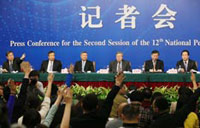
On Tuesday, authorities said China is likely to drop interest rate controls within two years, giving a clear timetable on interest rate liberalization after years of talk.
 |
 |
On the same day, authorities said they will approve five private banks on a trial basis, the latest move in opening the previously closed sector to private capital.
Some bemoan the passing of the good old days for the banks as these imminent policies mean they cannot reap easy and fat profits from the previous spread between a ceiling on the savings deposit rate and a floor on bank lending rates. Others are cheered by the prospect of better financial services as competition is sure to escalate when more players join the game.
Whether they welcome or dread the shift, they have to realize that the upcoming banking reforms are inevitable as China busies itself with retooling the economy. The best response is to prepare for the changes.
DIVERSIFIED PLAYERS
Though the People's Bank of China, the central bank, has long encouraged banks to diversify their portfolios by providing more services to the private sector, banking dinosaurs have been reluctant to do so.
Loans to large state-owned firms have always been a preferred choice due to stereotypical thinking that their payment is guaranteed. In contrast, small and medium-sized enterprises (SMEs) are often given a cold shoulder, even though they account for over 60 percent of gross domestic product. Without government backing, loans to SMEs are considered risky.
Moreover, banks have chosen to ignore the needs of small businesses and individual consumers as profits are hefty and assured already due to the government-imposed ceiling on the deposit rate and a floor on bank lending rates.
Though the authorities have made headway in interest rate liberalization over the years, they have felt strong opposition from the banks when it comes to the last part of the process, namely freeing up savings deposit rates.
The stale banking landscape has been shaken up as a handful of Internet companies, such as Jack Ma's Alibaba, weighed in to offer a wide range of investment and financial services.
Internet financial products like money market fund Yu'ebao created by Alibaba have been instant hits among the Chinese public. They have pulled money from traditional banks, which offer a maximum interest rate for one-year deposits of 3.3 percent, and moved it to web-based money market funds like Yu'ebao, which offer a seven-day annualized yield of nearly 6 percent.The better interest rate enabled Yu'ebao to attract 81 million users with aggregate deposits estimated at around 500 billion yuan ($81 billion) in just nine months.

Copyright 1995 - . All rights reserved. The content (including but not limited to text, photo, multimedia information, etc) published in this site belongs to China Daily Information Co (CDIC). Without written authorization from CDIC, such content shall not be republished or used in any form. Note: Browsers with 1024*768 or higher resolution are suggested for this site.
License for publishing multimedia online 0108263 Registration Number: 20100000002731