Comments
  Print
Print  Mail
Mail  Large Medium Small
(V) Climate change and environmental protection
1. In response to the recent reports of the Intergovernmental Panel on Climate Change, enhance the implementation of effective international climate change measures under the UNFCCC and its Kyoto Protocol, and contribute to the process of the Durban platform for enhanced action and the implementation of the outcomes of the Doha Conference.
2. Cooperate to support complementary initiatives, with a view to reducing global greenhouse emissions so as to hold the increase in global average temperature below two degrees on Celsius scale above pre-industrial level. This will include working together and with other countries through multilateral approaches that include using the expertise and institutions of the Montreal Protocol, to phase down the production and consumption of HFCs, based on the examination of economically viable and technically feasible alternatives, while continuing to include HFCs within the scope of the UNFCCC and its Kyoto Protocol provisions for accounting and reporting of emissions.
3. Welcome the world leaders Climate Summit planned by UN Secretary General Ban Ki Moon in September 2014 and help the global shift towards a low carbon economy.
4. Cooperate on achieving a strategic policy framework of green and low-carbon development for actively addressing global climate change, improving the quality of the environment and facilitating business-to-business cooperation within the green sector.
5. Facilitate the building of China's emission trading market and use of market mechanism in addressing climate change through a China-EU emission trading capacity building project. Enhance practical cooperation in building China-EU low-carbon cities, communities and industrial parks and controlling greenhouse gas emission. Develop low carbon technologies to promote extensive use of renewable energy to reduce consumption of fossil sources of energy and corresponding emissions.
6. Strengthen cooperation on aviation environment protection and sustainable development, and discuss how to handle the impact of aviation on the environment. This should include: exploring the development of a long-term mechanism for the collaboration between Chinese and EU civil aviation industries in ECER; facilitating the research and development of environmentally-friendly technology tackling aviation emissions; improvement of scientific understanding regarding aviation emissions impacts in order to better inform policy decisions; air traffic management innovation to limit and reduce environmental aviation emission; research, development and promotion of sustainable bio-fuels for aviation; design, construction and efficient operation of green airports; methodologies and technology for quantitative analysis of the impacts of various emission reduction measures.
7. Continue dialogue and exchange experience on regulatory matters and environmental standards and research.
8. Express readiness to explore opportunities and work together in the WTO on the basis of APEC's liberalizations of trade in environment goods and services.
9. Cooperate on tackling air, water and soil pollution, chemical pollution, sustainable waste management and resource efficiency within consumption and production, as well as environmental pollution emergency action.
10. Promote conservation and sustainable use of forests and biodiversity in particular on the valuation of ecosystem services, natural capital accounting and innovative financing mechanisms; implement the Strategic Plan 2011-2020 of the Convention on Biological Diversity (CBD) and the Convention on International Trade in Endangered Species of Wild Fauna and Flora (CITES).
11. Strengthen the China-EU Water Platform to promote water policy dialogue, enhance joint scientific research and business cooperation with a view to addressing water challenges such as water quantity (water scarcity, drought, ground water, urban water systems, water and security nexus), water use efficiency (water recycling, industrial water use, water and food nexus, water and energy nexus), water quality (pollution reduction, river basin management), and water disasters.
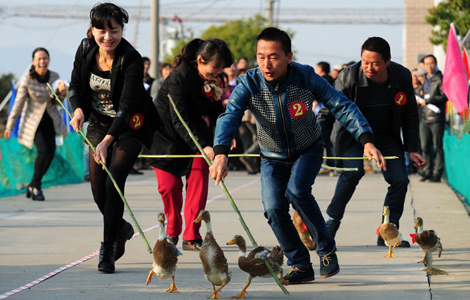
 Time to get quacking
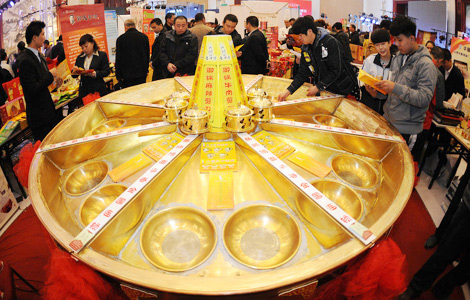 Giant hot pot sparkles in N China
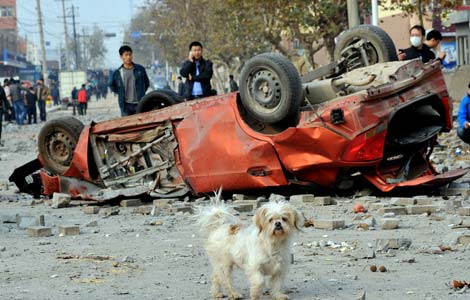 In photos: Oil pipeline blast in E China
 No holds barred training for elite force
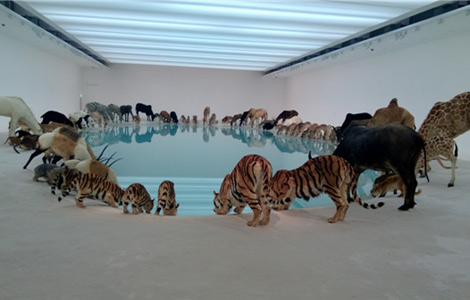 Cai Guoqiang unveils his serene side in art show
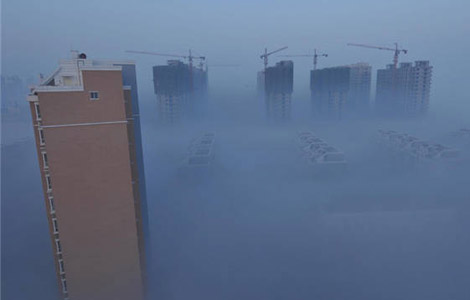 Fresh smog shrouds east, north China
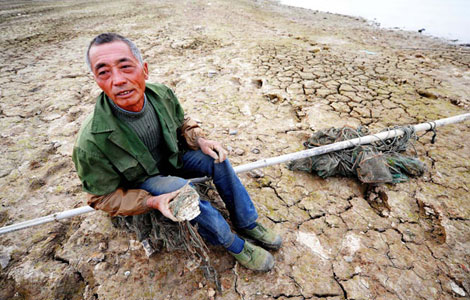 Drought turns lake into grassland
 Service seminar for E China train attendants
Copyright 1995 - . All rights reserved. The content (including but not limited to text, photo, multimedia information, etc) published in this site belongs to China Daily Information Co (CDIC). Without written authorization from CDIC, such content shall not be republished or used in any form. Note: Browsers with 1024*768 or higher resolution are suggested for this site.
License for publishing multimedia online 0108263 Registration Number: 20100000002731