Comments
  Print
Print  Mail
Mail  Large Medium Small
Reducing non-tariff trade barriers may increase China's economic output by 2 to 3 percent, a report indicates, promoting the country's transformation to a consumption-based economy.
The establishment of the Shanghai free trade zone is likely to ease concerns over market access, which is identified as one of the major non-tariff obstacles, experts said.
Eliminating supply chain hurdles can expand trade by 15 percent, according to a study by the World Economic Forum, in collaboration with consultancy Bain & Co and the World Bank.
"The reason is that it eliminates resource waste, whereas abolishing tariffs mainly reallocates resources."
"Moreover, gains from reducing barriers are more evenly distributed among nations than those from eliminating tariffs," said Gerry Mattios, principal of Bain and co-author of the report.
It is also a great opportunity for China as it seeks to combat a temporary growth slowdown without actually producing more, he noted.
Four major barriers are highlighted in the study: market access, border administration, communications and transport infrastructure and the business environment.
Mattios said that China has taken the lead in hardware construction, where transportation infrastructure, the availability and quality of transport services and information technology are made viable.
But the primary concern is the difficulty of market access, a broad area that includes safety and health requirements, technical standards, local content rules and other regulations that impose restrictions on foreign businesses.
The Shanghai FTZ is a step in the right direction in facilitating market access, said Mattios.
"I think a lot of companies are looking forward to the zone to overcome this barrier, because it is expected to enable foreign companies to set up operations more easily and consequently facilitate trade," he said.
Meanwhile, on the regulatory front, areas such as the efficiency of customs administration also need to be enhanced, Mattios noted.
Inefficiency usually reflects an insufficient allocation of resources to customs agencies or a failure to adopt best practices in customs procedures.
"For instance, if the customs office introduces electronic processes and allows submission of paperwork in advance, companies may reduce the waiting time of their containers at ports from the current three to five days to just a few hours," he said.
Chinese companies can on average generate 15 percent more revenue if their supply chains are simplified, he added.
The public and private sectors should also learn to embrace the concept of non-tariff barriers.
"Our experience showed that companies used to focus a lot on growth and market share, but not enough on logistics, which greatly affects business efficiency. "
For instance, the take off in e-commerce in China has given rise to even stricter requirements for supply chains. Efficient logistics can fully unlock the nation's consumption potential.
To reduce barriers to trade, the global business community needs to be innovative and follow best practices, which can be coordinated among small and medium-sized businesses and large multinationals through industries, said Scott Davis, chairman and chief executive officer of United Parcel Service Inc.
"In tandem, governments need to prioritize investments and ensure collaboration across countries, benefiting consumers through lower costs and more efficient global supply chains," Davis said.
One best practice in the United States, according to Mattios, is the creation of "centers of excellence" for respective industries by the US customs agency.
Each region has developed an industry-specific strength in handling customs issues, making the process more efficient, given the variety of regulations for different industries.
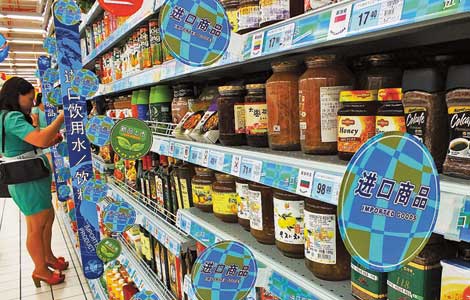
Chinese businesses have long been hampered by discriminatory non-tariff trade barriers, in the form of anti-dumping and anti-subsidy investigations.
Other barriers include import quotas, strict certification rules and high technical standards.
Acknowledging that countries sometimes apply non-tariff barriers for a variety of purposes, Mattios urged clear regulations and better coordination among governments and agencies to cope with the problem.


Copyright 1995 - . All rights reserved. The content (including but not limited to text, photo, multimedia information, etc) published in this site belongs to China Daily Information Co (CDIC). Without written authorization from CDIC, such content shall not be republished or used in any form. Note: Browsers with 1024*768 or higher resolution are suggested for this site.
License for publishing multimedia online 0108263 Registration Number: 20100000002731