TCM plants become hot commodities
With traditional Chinese medicine experiencing a revival, herbal flowers have become hot commodities on the market.
A particular plant, known as dendrobium officinale, is believed to have cancer-fighting powers and is gaining in popularity among consumers in China, Southeast Asia, South Korea and Japan. Commonly grown in greenhouses, the plant is a daily ingredient at dinner tables in Guangdong province.
One businessman, however, is finding success in producing the plant by eschewing commonly used methods.
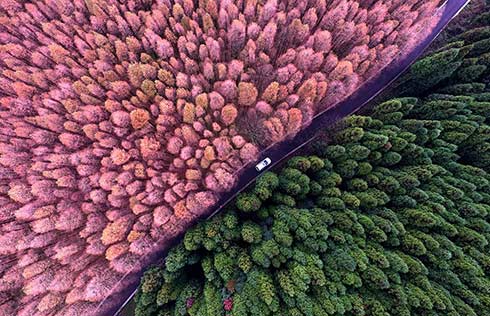
Rather than using greenhouses, Yang Shaowen is using the natural habitat of longan forests near Zhangzhou, Fujian province, to grow the precious herb.
Yang is president of Zhangpu Yankee Biotech Co, a company that specializes in growing herbal flowers, including the dendrobium officinale. Born in Zhangzhou, Yang has been working in the TCM industry for more than 20 years.
Over the past three years, the wholesale price for dendrobium officinale has soared from 800 yuan ($128) per kilogram to 1,200 yuan. With more home cooks using the plant in soups, and porridges and as a medicine to treat the flu, the price is climbing.
Yang is not the first to grow the herb on a large scale. In recent years, Fujian's neighboring province of Zhejiang has used greenhouses to grow it. Zhejiang is now a major base for cultivating and processing herbs in China.
In its natural environment, dendrobium officinale grows on rotting leaves and moss; if grown in soil, its roots are easily affected by bacteria. Replicating this delicate environment in a greenhouse costs millions of yuan.
But Yang has a big advantage in Zhangzhou. The average temperature here is higher than in Zhejiang and its winters are less harsh. The city's other distinct advantage is its thick longan forests, 35 hectares of which Yang has turned into his farm to cultivate 100,000 sprouts annually.
In his natural farm, he mixes pine sawdust with soil and places the sprouts in a basket. He then hangs the baskets on branches, where the lush leaves shade the plants from sunlight. Tiered in layers of branches, Yang said this method saves space as compared to conventional flat greenhouses.
Under these conditions, a tree can generate an annual output of 30,000 yuan and every hectare of longan forest can yield plants with a total value of 4.5 million yuan, Yang said.
"By using the forest, we can save on expensive equipment," Yang said. "We can also roll out this business pattern to the local farmers."
Yang said a listed company in Hong Kong has been negotiating with him to invest in another 30 hectares of what he calls his "forest plantation".




- China commemorates 100th anniversary of late Chinese leader Wan Li's birth
- China's role in efforts to eradicate poverty
- President Xi stresses implementation of poverty relief measures
- Rural kindergartens help to prevent poverty trap
- China to boost investment in rural transport to help poverty reduction