Comments
  Print
Print  Mail
Mail  Large Medium Small
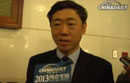
Li Zhenya, a member of the Chinese People's Political Consultative Conference National Committee, has called for stronger government supervision over traditional Chinese medicine, particularly the planting and processing of herbal medicines.
Li, who is vice-chairman of the Gansu Provincial Committee of the CPPCC, served as director of the local food and drug administration.
In recent years, many people, TCM practitioners among them, have complained that the time-honored therapy has become less effective, he said.
Worse, industry analysis has revealed that contamination by harmful materials, such as heavy metals and pesticides detected in TCM herbal medicines, prevented at least 60 percent of them from entering foreign markets.
"Many problems stem from initial links, including planting, preliminary processing and stocking of herbal medicines, which currently lack government-recognized standards and supervision," Li said.
It not only affects the development of the entire TCM industry, it also puts consumers' health at risk, said Huang Jianyin, deputy secretary-general of the World Federation of Chinese Medicine Societies.
Currently, planting and preliminary processing of herbal machines are mainly family-based, which makes quality control and government supervision quite difficult, Li noted.
Also, a great number of agencies trading herbal medicines were not registered with the authority, making it hard to track the origin of problematic herbal medicines, he added.
According to Li, only one-tenth of the more than 3,000 TCM traders in Longxi county, in Northwest China's Gansu province - a major TCM planting base of China - have been authorized by the local administration for industry and commerce.
Reports of fertilizer and pesticide overuse while planting the herbs, intentional adulteration and abuse of the chemical, sulfur, during processing were not rare, causing public concerns over safety.
A recent report by the Southern Weekly said that at least 20 percent of the herbal medicines sold at 17 wholesale markets were fake.
In June, the Hong Kong Department of Health made public a suspected case of herbal medicine poisoning involving a local woman, who had taken a self-prepared herbal decoction to alleviate menopausal symptoms.
Investigations showed that the herbs were sourced from Guangzhou, in South China's Guangdong province.
In order to ensure quality, some large TCM companies began sourcing herbs directly from planters, said Xu Yongqian, a division director of the Jiangzhong Pharmaceutical Group.
In addition, the company began testing raw materials purchased for potential contaminants - eight heavy metals and 180 pesticides - before production, he said.
By contracting herb farmers directly, TCM companies can introduce standards and guidelines about the management of soil, use of fertilizer and pesticides, and planting practices, Li said.
shanjuan@chinadaily.com.cn
 Top 10 industries with most job-hoppers
 Asian business aviation show opens in Shanghai
 10 Red Dot Award winning carmakers in '14
 Get a birthday cake for your pets
 Top 10 most influential tycoons in China
 Bicycle-friendly Hainan hotels cater to riders
 Top 10 best airlines in the world
 Apple Watch makes debut in China's Hangzhou

 Traditional Thai New Year starts with a splash
 Medals marking victory in Great Patriotic War made in Russia
Copyright 1995 - . All rights reserved. The content (including but not limited to text, photo, multimedia information, etc) published in this site belongs to China Daily Information Co (CDIC). Without written authorization from CDIC, such content shall not be republished or used in any form. Note: Browsers with 1024*768 or higher resolution are suggested for this site.
License for publishing multimedia online 0108263 Registration Number: 20100000002731