Super foods: facts & fiction
Man has been looking for the elixir of eternal life for ages. The search is still on, and we now eat with more awareness than ever before. Pauline D. Loh looks at trendy super foods, and how we have lost the art of eating.
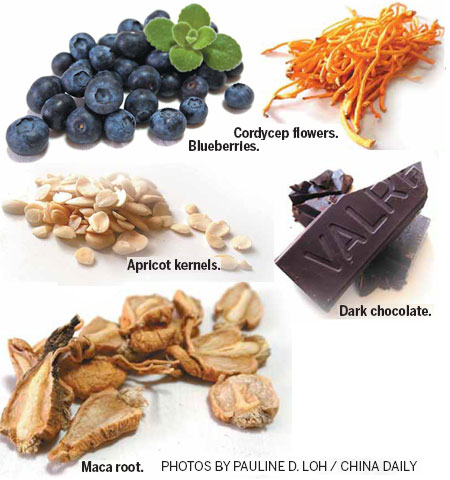
Acai berries, noni juice, sea buckthorn extract, Peruvian maca root, wolfberries, ginseng, gingko nuts, cordyceps or caterpillar fungus, black garlic, ganoderma spores - these are all exotic supplements that claim to cure you of all ills, including cancer.
They are the exotic super foods, their effectiveness often backed by claims that they have kept past civilizations hale and hearty. Many are drawn from the diets of ancient peoples like the Mayans, but just as many have been "discovered" by new Western converts to traditional Chinese medicine.
|
 |
Many Chinese used to raise amused eyebrows when they saw Western friends popping pills of gingko extract and downing gallons of goji berry (wolfberry) juice.
To the Chinese, these are everyday ingredients, to be taken in moderation, as food. And to the Chinese, food is medicine and medicine is food, a philosophy remarkably similar to that of the ancient Greek physician Hippocrates. (Moderation is part of the prescription. Too much gingko is actually toxic, as every Chinese child has been taught.)
That's the difference between Western and Chinese medicine. One cures the symptoms, while the other seeks out the root of the illness and believes a balanced body is the answer to good health.
That does not mean the Chinese do not believe in health tonics, supplements and super foods. They just have their own lists, mostly herbal, but sometimes animals and minerals.
We really don't know when we started justifying every bite we ate. In times past, mothers from both hemispheres and all longitudes urged their children to "eat more spinach because it's good for you", often pointing to the TV and Popeye the Sailor man as animated proof.
In these days of New Age nutrition, mothers still try to persuade their kids to eat more spinach, only they'll be more likely quoting liberally from online surveys and nutrition charts.
Not that it works any better than Popeye in persuading the young ones to down the dark green stuff.
As we grow older, though, the search for health and the panacea for urban ills and physical discomforts take over. We'll be exploring the latest health supplements, combing through a humongous overload of information from e-mails and Web links sent by well-meaning friends, relatives, acquaintances and online marketers.
There are plenty of health fads to follow, some being rather edgy, and others demanding great discipline over long periods of time.