BEIJING - Before high-level government officials from nearly 30 countries and international associations of the steel industry gathered in Brussels for a three-day meeting on Monday, China was set to be blamed for the sector's grave ills.
Last week saw tens of thousands of German steel workers go on strike over steel products from China, and Indian giant Tata's closing of mills in Britain also drew a media flurry against so-called dumping from China.
Analysts said it's convenient for the West to point the finger at China and indulge in domestic populism for its own good. But such a poorly thought out strategy won't help lift the world out of its steel woes and serve instead to strengthen the protectionist bent of some developed economies.
China: culprit or scapegoat?
The fact that China is the world's largest steel producer and consumer has made it vulnerable to Western critics. But Zhang Ji, assistant minister of China's Ministry of Commerce (MOC), blamed "the slow recovery of the world economy" and "sluggish demand" for the current steel glut.
"In recent years, 85-95 percent of steel produced by China has been for domestic consumption. China's annual steel consumption accounts for 45 percent of the global in total," he said Monday in an interview with Xinhua.
In order to rein in production, China has stopped issuing new licenses for steel projects and begun shutting down outdated facilities.
China also announced earlier this year that it will continue to reduce crude steel capacity by 100 million to 150 million tons in the next five years. Doing so would cost China 100 billion?yuan in re-employing over 500,000 laid-off steel workers.
"None of the money will subsidize steel exports," said Zhang. "China has no subsidy policies to stimulate steel exports; instead, it has leveraged export tariffs on some steel products ... The export tariff for billet is 20 percent and for hot-rolled wire rod 15 percent."
In this context, China's crude steel production in 2015 has decreased 1.92 percent year on year, the first annual decline since 1981, with the capacity utilization rate souring to 71.2 percent, higher than the global average of 69.7 percent.
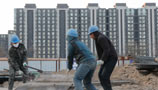
To boost domestic demand, Zhang revealed that China has began large-scale infrastructure projects like the rebuilding of dilapidated houses. The automobile, machinery equipment, power and shipping sectors will see their consumption of steel rise as well. Expect demand for steel to soar to ensure China's Belt and Road Initiative becomes a reality.
Westerm solution: protectionism, period
Analysts said the West's solution to the current steel issue is riddled in protectionism and China bashing.
At the Brussels gathering, Secretary of Commerce Penny Pritzker and Trade Representative Michael Froman attributed the "fundamental structural problems" in the global steel industry to China, threatening "trade action" by "affected governments including the United States," if Beijing does not take actions "timely and concrete" enough to satisfy Washington's demands.
The situation on the other side of the Atlantic hasn't been much better. The European Commission issued a policy paper in March, vowing to implement trade remedies and proactive regulation regarding steel imports.
In an overt gesture to single out China, the agency has 16 protective measures aimed directly at China; six of ten steel products under its investigation are related to China; the organization is investigating three Chinese mills and inflicting punitive tariffs on two steel imports.
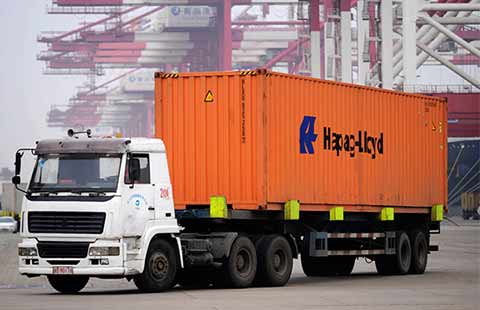
Moreover, China's exports to European nations, such as Britain and Germany, account for a small fraction of their imports both in volume and sales, not to mention that its exports are mostly of the low value-added variety, such as ordinary steel rods and plates, which many European countries no longer make and have to import anyway.
Furthermore, Europe's accusations are ignorant of the fact that the fundamental reason for its undynamic steel companies and low profits lies in high costs including labor.
Experts say that the United States and Europe should be more constructive in solving the industry's problems rather than engaging in a war of words with China.
Excess capacity is a "shared problem" that "needs to be tackled through joint efforts," said a position paper disseminated by the Chinese delegation during the Brussels meeting.
"Frequent use of trade remedy measures and other import-restrictive measures does not address the root cause of global steel overcapacity, and is detrimental to the division of labor and cooperation," noted the paper, adding that China champions free and open international trade for the steel industry.


Copyright 1995 - . All rights reserved. The content (including but not limited to text, photo, multimedia information, etc) published in this site belongs to China Daily Information Co (CDIC). Without written authorization from CDIC, such content shall not be republished or used in any form. Note: Browsers with 1024*768 or higher resolution are suggested for this site.
License for publishing multimedia online 0108263 Registration Number: 130349