|
 |
|
Organic restaurant entrepreneur Stephanie Ho creates a complete supply chain for her restaurants to guarantee the integrity of their food. [Photo/China Daily] |
Wealthy heiress Stephanie Ho may be something of a fashionista in her spare time, but these days she prefers discussing culinary matters in her role as the founder of two organic-restaurant brands, Green & Safe and Qimin Hotpot.
"Organic food is seen in the Chinese mainland as a luxury for the rich and a comfort for those in poor health. I want to change that to make it more affordable and more widely available," said the 37-yearold, whose family owns Yuen Foong Yu group, Taiwan's largest paper-manufacturing conglomerate.
"People are slowly getting more familiar with organic food, but I'm not sure if it's getting that popular yet," added Ho.
She recently launched the second branch of Qimin in Shanghai, where shelves full of homemade soy sauce separate the main dining area from private cubicles. Together with Green & Safe, a more Westernstyle restaurant, the two promise to use only natural ingredients untainted by chemicals, pesticides or MSG.
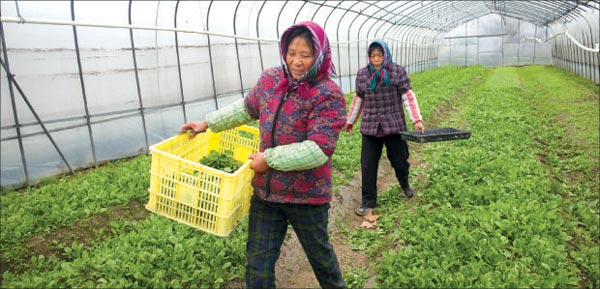
The restaurants are supplied by her organic farm in Kunshan, Jiangsu province, which covers more than 33 hectares. It is about an hour's drive from Shanghai and close to the mainland headquarters of Ho's family business. By cutting out middlemen and growing her own ingredients, she has attracted a devoted following among Shanghai's expat community and healthconscious locals.
Her interest in food goes far beyond her own farm. While her friends in Taiwan busy themselves in the front rows of fashion shows and department stores, she takes great delight learning about all the latest food trends from exhibitions and expositions around the world.
Broccolini, a specially grown hybrid of broccoli and kai-lan (Chinese kale), is one trendy new "superfood" Ho is trying to promote. Meanwhile, pomegranate seed oil is the new olive oil, she said. And spices from the Middle East are leading the exotic movement in the culinary world.
In an era of processed food, pollution and food safety scares, more people in Shanghai and other parts of China are now growing their own food. It is not uncommon to hear tales of well-paid white collars leaving the city to farm the land and reconnect with their roots.
The growing market for organic food is also attracting investors. One of them, speaking on the condition of anonymity, told Caixin, a leading Chinese business weekly, that people can buy a license to run an organic farm in China for as little as 20,000 yuan ($3,225). Only some of the land has to grow organic food for the whole farm to benefit from the organic label, he added.
But putting the integrity of their food above profit may be a bitter pill to swallow for some. First, the land must be left barren for three years to restore its fertility, as this is usually lost during years of over-plowing through conventional growing. And even when the crops are harvested, there is no guarantee they will sell.
"It's hard for consumers to trust farmers these days because of all the stories about safety problems in the food supply chain," said Chang Tianle, who runs Beijing Farmer's Market.

Copyright 1995 - . All rights reserved. The content (including but not limited to text, photo, multimedia information, etc) published in this site belongs to China Daily Information Co (CDIC). Without written authorization from CDIC, such content shall not be republished or used in any form. Note: Browsers with 1024*768 or higher resolution are suggested for this site.
License for publishing multimedia online 0108263 Registration Number: 130349