China may have to consider further policy tweaks to stabilize growth, economists say
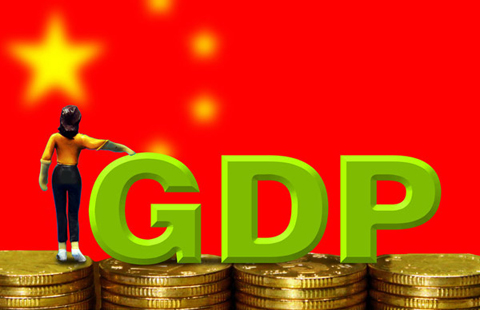
The deepened deflation in China may increase economic slowdown pressure this year to lower than 7 percent, according to analysts.
To cut commercial banks' reserve requirement ratio may be a choice to release market liquidity and boost investment in order to stabilize growth, they said.
Given dropping oil prices in the global market, China shows signs of deflation, especially in the manufacturing industry, which is also the main threat in several parts of the global economy.
As a large importer of raw commodities and exporter of manufactured products, China plays a major role in the determination of global prices. But now it is importing deflation, said Louis Kuijs, the chief economist in China at Royal Bank of Scotland Plc.
The Consumer Price Index eased to 2 percent last year, which was a near five-year low.
Economists expect more downward pressure on consumer inflation from falling commodity and energy prices in 2015.
The Producer Price Index has been falling for about three years, and the decline deepened to 3.3 percent in the last month of 2014.
International raw commodity prices have fallen particularly rapidly in recent months and this is going to intensify the fall in the PPI in the coming months, experts said.
Influenced by dropping producer prices, in the first 11 months of 2014, Chinese industrial profits increased 5.3 percent year-on-year, down from 13.2 percent in the same period of 2013, according to the National Bureau of Statistics.
If the PPI remains weak and industrial deflation reaches the consumer sector, household spending will decrease, investment will be restrained, income will be dragged down and the unemployment rate will increase, while corporate debt defaults will increase, said Jiang Shixue, a researcher at the Chinese Academy of Social Sciences.
Zhang Yongjun, a senior economist at the China Center for International Economic Exchanges, said: "The current broad money supply is lower than the expected level to support GDP growth, which is also adding to deflation pressure."
Policymakers should consider the current deflation situation and take measures to prevent economic depression, or a sudden drop of GDP growth to below 7 percent this year, he said.
UBS AG predicted earlier that China's GDP growth may slow further to 6.8 percent this year, weighed down by the ongoing weakness of property construction and infrastructure-related funding issues.
It is possible to see further monetary easing via liquidity provisions, including RRR cuts, to offset slower foreign exchange reserve accumulation and at least 50 basis points in benchmark rate cuts to prevent real rates from rising, avoid passive tightening and safeguard financial stability, the international financial institution said.

Copyright 1995 - . All rights reserved. The content (including but not limited to text, photo, multimedia information, etc) published in this site belongs to China Daily Information Co (CDIC). Without written authorization from CDIC, such content shall not be republished or used in any form. Note: Browsers with 1024*768 or higher resolution are suggested for this site.
License for publishing multimedia online 0108263 Registration Number: 130349