First it was European formula powder milk, then New Zealand milk. Now Chinese consumers are adding Japanese rice to the list of everyday foods they will bring in from abroad at luxury-good prices because they fear the local alternatives are not safe.
The volume of rice imported from Japan remains small-160 metric tons last year, according to Japan's National Federation of Agricultural Cooperative Associations.
But that is more than triple the total in 2013, a trend that illustrates Chinese consumers' dwindling confidence in the safety of the country's own agricultural produce.
"Chinese rice farmers use pesticides," said a seller identified as Ying Ying, who started offering Japanese rice on the Taobao online marketplace in August. "Japanese rice isn't polluted by heavy metals."
Pollution from industrialization has exacted a heavy toll on China's soil and water. In May 2013, officials in Guangdong province in southern China said 44 percent of rice samples contained excessive levels of the metal cadmium.
A study by the Ministry of Environmental Protection in April estimated that 16.1 percent of China's farmland was contaminated. In parts of the country, soil pollution is so bad that some rice farmers refuse to eat what they grow.
After the cadmium revelations, some Chinese consumers began to see rice from Thailand as an affordable and safe substitute.
In contrast, Japanese rice is neither cheap nor easy to find in China. Japanese rice imported by Chinese grain trader COFCO Group sells for 74 yuan ($12) a kilogram on PinStore, an online supermarket run by Japanese trading house Sumitomo Corp. Domestic rice sells there for as little as 7.5 yuan per kg.
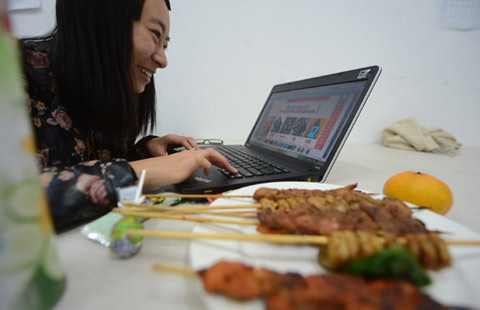
As demand grows, Chinese consumers are increasingly turning to online platforms such as Taobao, to buy rice directly from individuals in Japan.
One person seems to have paid as much as 1,499 yuan ($241) for 5 kg, according to Taobao.
Steep prices, though, are no deterrent for some.
"Much tastier than Chinese rice. Worth every cent-great texture and taste," one delighted buyer wrote on Taobao.
To meet demand, some Chinese producers now say they use Japanese seeds and promote their rice as a safer alternative to purely domestic strains.
Zhejiang Xinxie Yueguang Agricultural Science and Technology Co said its Echizen brand rice is safe and grown with "water from pure sources and strict quality control". The packaging says the rice is a Japanese variety.
But Echizen rice is grown in Changxing county, a hub of lead-acid battery production in eastern Zhejiang province. Battery production can be highly polluting.
The Chinese eat around 120 million tons of rice a year and the country imported more than 2.2 million tons in the first 11 months of 2014, including 1.2 million tons from Vietnam and 626,000 tons from Thailand, Customs data show.
Japan is a small rice exporter-just 3,777 tons in January to November 2014, according to Ministry of Agriculture data-but it is looking to boost shipments to Asian countries as part of a wider push to export more agricultural products.
However, if the trend to China looks encouraging, any further increase through normal export channels may be slow: the Chinese authorities have given just one Japanese rice mill clearance to send polished rice.
Others have begun an application process but that has stalled. Some would-be suppliers have been waiting for three years, a Japanese government official said.

Copyright 1995 - . All rights reserved. The content (including but not limited to text, photo, multimedia information, etc) published in this site belongs to China Daily Information Co (CDIC). Without written authorization from CDIC, such content shall not be republished or used in any form. Note: Browsers with 1024*768 or higher resolution are suggested for this site.
License for publishing multimedia online 0108263 Registration Number: 130349