 |
|
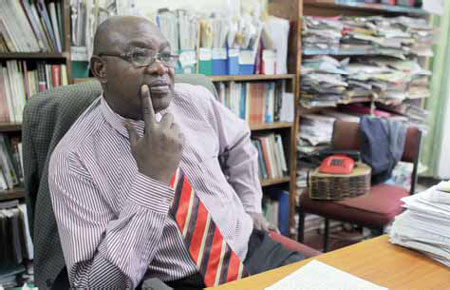
Philip Nyinguro, associate professor of international relations at the University of Nairobi. [Photo/China Daily] |
"I can remember when Sanlitun (now the bustling entertainment district in Beijing) was just bush and Shenzhen was a small fishing port and now it is like Hong Kong. There is a feeling if they can do it, we can do it too," he says.
Over tea in the diplomatic residence in Accra bedecked with Chinese artifacts, Gong Jianzhong, China's ambassador to Ghana, says outsiders often misunderstand the China-Africa relationship because they forget China - despite being the world's second-largest economy - is also a developing country.
"In GDP per head terms China ranked until recently behind Angola and not far ahead of Ghana. Fifty years ago we faced the same challenges, and today we face the same challenges," he says.
"If you go to the countryside in China, you see the same problems that are faced here in Ghana. In both there are issues of healthcare and infrastructure. We both have a strong desire to develop our economies."
Perhaps the biggest way China is helping Africa is in building infrastructure. The lack of functional roads and unreliable power supplies makes it very difficult for many businesses to operate at all in many parts of Africa. Transporting both raw materials and finished goods to market is a major headache.
According to a 2010 World Bank report, Africa needed to spend $93 billion on infrastructure every year to sustain future growth. With current spending of only about $45 billion, it cannot meet half that target.
Wale Shonibare, chief executive officer of UBA Capital, the investment bank subsidiary of UBA Group, one of the largest banks in Africa, based in Nigeria, says Chinese companies are very efficient in building infrastructure.
"The Chinese just say we will come in and build this or that and also provide the funding. There are none of the problems of trying to attract foreign investment into particular projects, which takes a lot of time," he says.
"China spends around 12 percent of its GDP on infrastructure development, whereas a country like Nigeria spends just 3 percent, the last time I checked. We need to spend more in order to sustain growth."
China will go and build infrastructure where others fear to tread. Chinese companies were the first into Liberia in 2006 after it had been wracked by civil war for a generation. The country has very limited power and because of the shortage some of the world's highest electricity costs.
Samuel B. Nagbe Jr, assistant minister in the Ministry of Public Works in the capital Monrovia, says Chinese involvement has made a difference.
"Chinese companies are the only actors in terms of infrastructure contracts. This is because they were prepared to take the risk when everyone else didn't feel secure to go there," he says.


Copyright 1995 - . All rights reserved. The content (including but not limited to text, photo, multimedia information, etc) published in this site belongs to China Daily Information Co (CDIC). Without written authorization from CDIC, such content shall not be republished or used in any form. Note: Browsers with 1024*768 or higher resolution are suggested for this site.
License for publishing multimedia online 0108263 Registration Number: 130349