As African economic prospects brighten, there is debate about which model best suits the continent
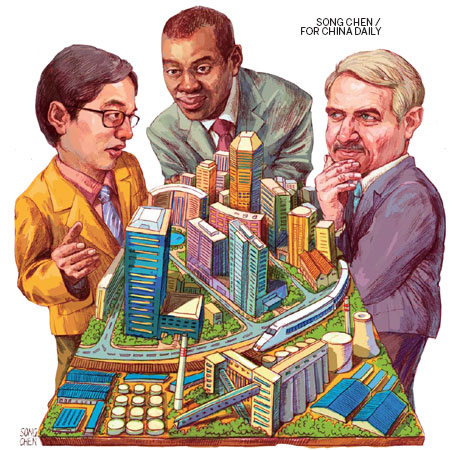
Ahmed Shide admits his country is following a development path similar to that of China but not any sort of model.
The youthful Ethiopian state minister of finance and economic development was speaking from his office in the government buildings area of central Addis Ababa.
"It is not about copying absolutely the Chinese model, but the history of how they managed their development process has been influential, particularly in targeting economic sectors and unleashing the forces of the market in terms of attracting foreign direct investment," he says.
The dusty streets of Addis Ababa, one of the highest-altitude cities in the world, may still look a world away from China's modern cities of Shanghai and Guangzhou, but China-style policies are much in evidence.
The government has set up special economic zones, including one, the Eastern Zone, set aside for Chinese companies, to encourage foreign direct investment and foster industry.
It has also adopted five-year plans to give itself targets for economic development.
The haunting Live Aid images of famine and disease of the mid-1980s are no longer being allowed to define the nation.
"The way China has industrialized and grown their agriculture and the way they have delivered a government-led process of development has been something to learn from," Shide says.
As many commentators have observed, not just Ethiopia but other African countries are now looking eastward rather than to the West for their economic inspiration.
They have become frustrated by the policy prescriptions for Africa that have prevailed since the late 1980s. This so-called Washington Consensus - central to the thinking of the Washington-based institutions of the World Bank and the IMF - has put pressure on African countries to look for private-sector solutions to their problems and also initiate reforms in order to get development assistance.
Chinese loans and major investment in infrastructure in much-needed roads and bridges have proved to be a breath of fresh air over the last decade.
And since the collapse of Lehman Brothers in 2008 and the financial crisis emanating from the West, there has been a greater interest in the sort of state capitalism that has featured strongly in Asia's development.
Martyn Davies, chief executive officer of Frontier Advisory, a research and strategy-consulting firm based in Cape Town, believes there has been a real change of mood in Africa.
"We have gone from almost a market fundamentalist position of the post-1989 Washington Consensus to a more interventionist form of state capitalism," he says.
"Words like privatization and free-market trade have almost become dirty words, and you are never likely to hear them at a South African political forum. The Western financial crisis has been used to justify this."
Ethiopia was one of six African countries that made it into the top 10 fastest-growing economies in the world over the last decade, according to research by The Economist magazine using IMF data.
Perceptions of the continent are changing, and some have argued that the Lions of Africa may give the Asian Tigers a run for their money in the development stakes of the 21st century.


Copyright 1995 - . All rights reserved. The content (including but not limited to text, photo, multimedia information, etc) published in this site belongs to China Daily Information Co (CDIC). Without written authorization from CDIC, such content shall not be republished or used in any form. Note: Browsers with 1024*768 or higher resolution are suggested for this site.
License for publishing multimedia online 0108263 Registration Number: 130349