No soft landing for Tokyo's hard line










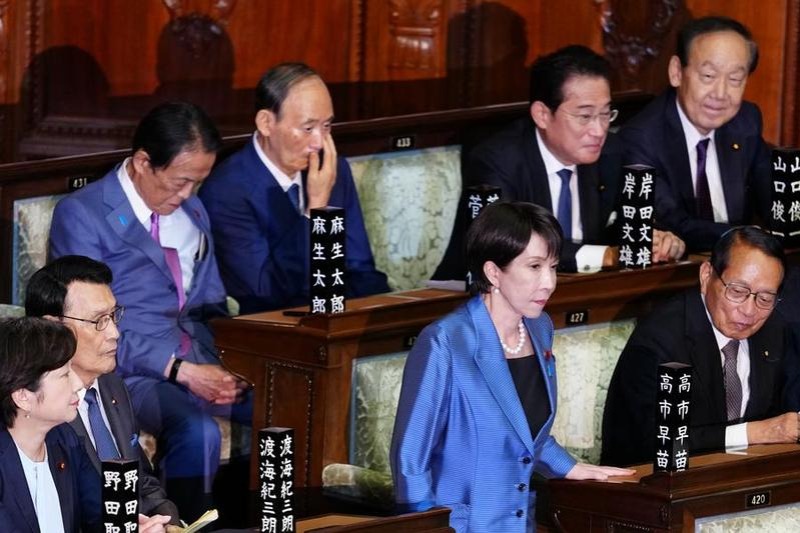
On Monday and Tuesday, a Japanese diplomat, Masaaki Kanai, visited Beijing amid Sino-Japanese tensions sparked by Japanese Prime Minister Sanae Takaichi's erroneous remarks on Taiwan. But this diplomatic engagement had little effect and the situation remains tense.
After Takaichi's unprecedented provocation against China, the Japanese government is seeking dialogue to "extinguish the fire" but refusing to retract the erroneous statements. This contradictory approach indicates that Japan has failed to grasp the severity of the situation and hopes to placate it with superficial gestures. But this act of "avoiding the substance" will not have a "soft landing".
Takaichi's remarks on Taiwan were not a "slip of the tongue" but a premeditated political provocation. She deliberately linked the Taiwan question to a "situation involving a survival crisis" for Japan, explicitly stating Japan's intention to intervene militarily in the Taiwan question. This is a crude interference in China's internal affairs, violates international law and basic norms of international relations, severely undermines the political foundation of Sino-Japanese relations and blatantly challenges the post-World War II international order.
Takaichi's comments have also triggered widespread opposition and concern within Japan. Critics argue her remarks are potentially unconstitutional, while many others worry this could drag Japan back into war. Even members of Japan's ruling Liberal Democratic Party worry that "excessively provoking China will do more harm than good". China's issuance of a travel advisory and the possibility of subsequent economic sanctions have also heightened anxiety in Japan's business community.
Facing strong countermeasures from China and domestic criticism, Takaichi is clearly under immense pressure. She was forced to backpedal, stating that she "will not make similar statements in the future "and dispatched a senior diplomat to China seeking dialogue. However, behind this "soft posture" is a refusal to admit wrongdoing. She explicitly stated she "will not retract the remarks on Taiwan" and even implied the "relevant expression is in line with Japan's security interests". It is an attempt to quell the storm at the minimum cost, while retaining room for future provocations.
More dangerous than the refusal to admit fault is Japan's continued adventurism under the guise of "dialogue". Japanese Defense Minister Shinjiro Koizumi recently publicly mentioned that Japan must have nuclear submarines. The Takaichi cabinet also indicates to adjust Japan's Three Non-Nuclear Principles to allow nuclear weapons to be brought into the country. These moves have serious ramifications. The principles are a crucial pillar of Japan's post-war peace framework. Loosening them not only signifies a significant acceleration of Japan's military normalization but could also trigger a regional nuclear arms race, impacting the international non-proliferation system.
Even more disturbing is that Takaichi may visit the Yasukuni Shrine on Dec 26.The shrine, which honors 14 Class-A WWII war criminals, is a symbol of Japanese militarism. Such an action, combined with historical revisionism and provocations on the Taiwan question, is tantamount to rubbing salt in the wounds of victim countries. It also exposes the hypocrisy of Japan's efforts to ease tensions.
The root of Japan's contradiction lies in its short-sighted decision-making, which prioritizes political self-interest over the national interest. As a protege of former prime minister Shinzo Abe, Takaichi relies on the support of right-wing forces. She needs radical rhetoric on Taiwan to consolidate her image as "Abe's successor". Concurrently, she is using "an external threat" to divert attention from domestic problems, such as a sluggish economy and public hardship. This beggar-thy-neighbor political calculation has pushed Japan into a dangerous position.
More dangerously, US President Donald Trump's recent vague response to Takaichi's remarks already indicates that the United States will not "foot the bill" for Japan's adventurism. The US uses Japan as a "pawn" for containing China, but is unwilling to be dragged into a Taiwan Strait conflict and a direct confrontation with China. The US' stance puts Takaichi's "rely on the US to counter China" policy in a predicament.
Japan's provocations have already triggered a chain reaction, eroding the foundations of peace and stability in East Asia. Takaichi's remarks might lead "Taiwan independence" separatist forces to misjudge the situation and accelerate their "reliance on Japan to seek independence", which would further escalate tensions in the Taiwan Strait.
For the situation to achieve a "soft landing", Japan must abandon its illusions, face reality and demonstrate sincerity to correct its mistakes. Takaichi must explicitly retract her erroneous remarks on Taiwan, publicly reaffirm her commitment to the four Sino-Japanese political documents, cease all words and deeds that "use Taiwan to contain China" and sever ties with "Taiwan independence" forces. This is the prerequisite for repairing Sino-Japanese relations.
Japan must also stop its military adventurism, refrain from using "external threats" and a "Taiwan contingency" to break through post-war military restrictions, and instead win the trust of its Asian neighbors through tangible actions. If Takaichi brazenly proceeds to visit the Yasukuni Shrine, it will add yet another mistake and cause irreparable damage to Sino-Japanese relations.
Historically, Japan repeatedly instigated "survival crises" to launch wars of aggression, only to plunge itself into a genuine survival crisis in the end. If Takaichi's government continues to indulge its political ambitions and proceeds further down the wrong path, it will not only worsen Japan's diplomatic and security environment but also risk turning Japan into a troublemaker for regional security, ultimately harming Japan's own interests and image.
China's strong response is necessary. As the saying goes, "peace secured through struggle will endure". Our objective is to safeguard the overall stability of both Sino-Japanese relations and the region. Japan must truly recognize that the Taiwan question is a red line that should not be crossed. The door for Sino-Japanese dialogue remains open, but the prerequisite is that Japan must correct its mistakes and cease its provocations. If Japan continues to act obstinately, it will face even stronger countermeasures from China and pay an unbearable price. It is hoped that Japan will make the correct choice.
The author is a specially appointed research fellow in the Department for Asia-Pacific Studies, China Institute of International Studies.
The views don't necessarily reflect those of China Daily.
If you have a specific expertise, or would like to share your thought about our stories, then send us your writings at opinion@chinadaily.com.cn, and comment@chinadaily.com.cn.