Beijing makes AI education compulsory in public schools
Capital is first provincial-level region to bring in high-tech learning across the board









Editor's Note: The rapid advancement of artificial intelligence is reshaping nearly every facet of human existence. This series will take an in-depth look at this transformative force, examining how AI is redefining the way we live, work and interact.
Beijing has become the first provincial-level region in China to launch compulsory comprehensive artificial intelligence education for primary and secondary schools, with the capital demonstrating the importance of incorporating the groundbreaking technology into early education.
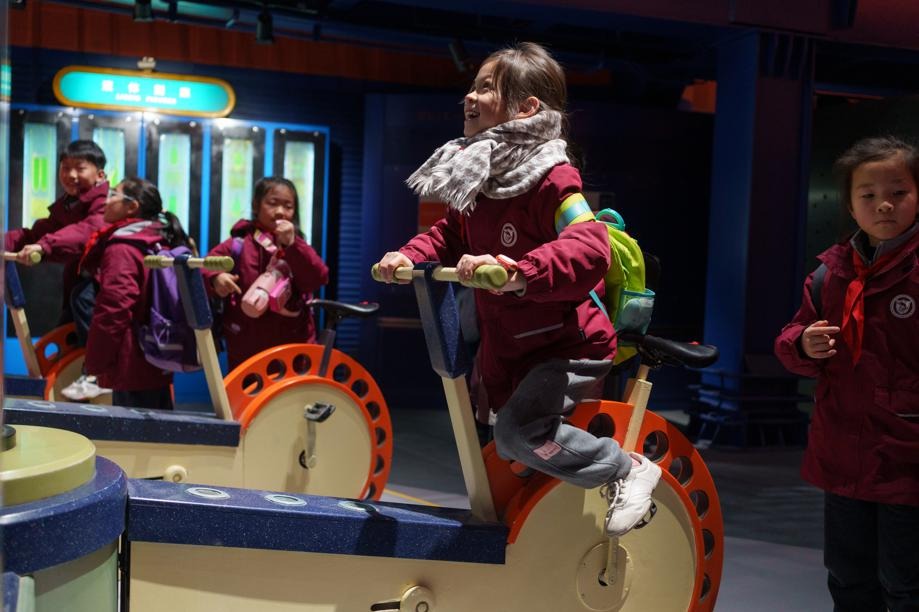
This semester, over 1,400 primary and secondary schools in the city will provide no fewer than eight class hours of AI education covering all grade levels from primary through senior high schools.
This citywide initiative follows the release of two recent guidelines, which together define the positioning, content and instructional pathways for AI education.
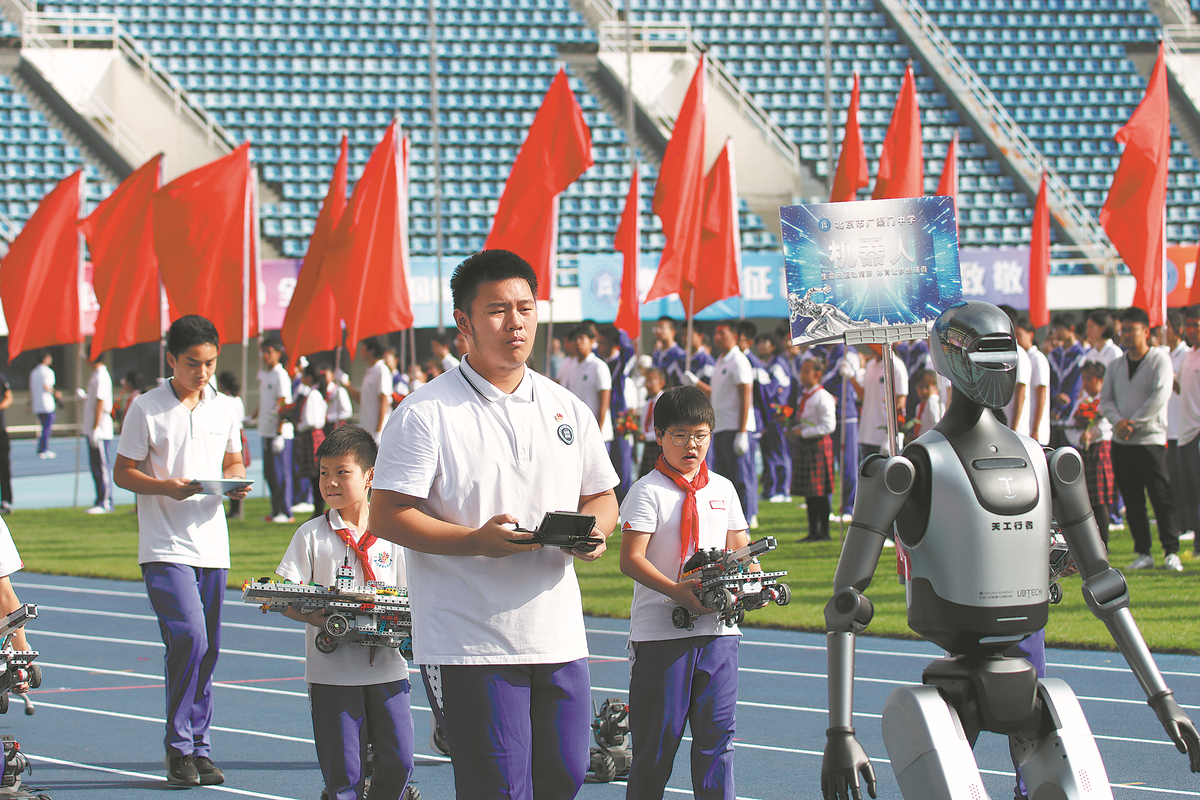
Schools such as Haidian District Experimental Primary School and Guangqumen Middle School are already pioneering comprehensive, multistage AI programs that equip students with both foundational knowledge and hands-on skills.
At Haidian Experimental Primary School, students from Grades 1 to 6 are progressively introduced to AI through interactive, project-based lessons. Younger students build basic AI awareness, middle graders learn fundamental principles, and upper-grade students advance to creating smart hardware applications, according to Shi Yuan, head of the school's information center.
"The courses are designed to make AI tangible and accessible," he said. "We focus on letting students experience AI through projects that connect to real-life scenarios."
The school employs a range of educational tools, including block-based programming platforms, iFlytek robots with image recognition capabilities, and large language models that help students generate executable code from Chinese instructions.
"We turn abstract concepts into tangible projects. It's not about making every child an expert, but about helping each one understand and interact confidently with AI," Shi said.
After-school clubs offer further exploration, with students studying more advanced projects and preparing for competitions, he added.
"Learning AI is not difficult for these young students as they are very interested in it. Just like people learning to use the computer some 20 or 30 years ago, the age of AI has come and we are not turning back."
Two Grade 6 students at the school, Miao Ruoyi, 11, and Fang Xi, 12, are both members of the programming club and started learning about AI in third grade.
Ruoyi finds great satisfaction in assembling robots. "Programming feels a bit challenging to me, but building things with my hands is much more interesting," she said.
She is strong in math and English and sees programming as a refreshing diversion.
The sense of accomplishment after finishing a robot — with components like clamps for grabbing buckets and rollers for shooting balls — keeps her motivated.
Xi, who has already won awards for his work in school competitions, said he feels he is gifted in learning AI and coding, and thinks they are actually more straightforward than learning academic subjects.
Guangqumen Middle School has built a continuous AI curriculum spanning primary, middle and high schools, according to Pei Yi, director of the school's talent cultivation center. Pei said that the goal is not only technical mastery but also preparing students for a human-machine collaborative future.
"In the future, human-machine collaboration will be inevitable. Students may not all become AI specialists, but they must learn how to use AI effectively," he said.
At the primary level, AI knowledge is integrated into information technology classes starting from the third grade. Lower grades focus on handson experience, while upper grades introduce basic programming. Extracurricular clubs, such as robotics and coding, create a seamless link with middle school education, he said.



- China, Algeria expand space cooperation with new satellite launch
- Cross-Strait Chinese New Year bazaar unites cultures in Fuzhou
- Emergency Management Minister Wang Xiangxi under investigation
- Overseas-Chinese group tours Xinjiang as special guests
- China launches satellite for Algeria
- Capital accelerates humanoid robot mass production