Urban renewal beyond economic growth









A city can be compared to a vibrant living organism, with its developmental process mirroring metabolism, which yields energy leading to transformation, enhancement and renewal. Urban renewal functions as both a self-regulating mechanism and an externally driven upgrading, primarily aimed at preventing, mitigating as well as reversing urban decay.
In 2011, China's urbanization rate surpassed 50 percent, reaching 67 percent by 2024, marking the transition to a new stage of development focusing on people-centered and quality-driven growth. As for China's new-type urbanization, urban renewal programs are now embracing innovative paradigms that redefine sustainable urban transformation. The country now pursues a transformative path anchored in people-centric development and sustainable progress.
Urban renewal has played an important role in China's socioeconomic advancement and forging a new development pattern. China has a total of 66.2 billion square meters of existing urban housing, with municipal pipelines extending over 3.6 million kilometers, 230,000 municipal roads, and 90,000 bridges, indicating a significant demand for renovation and reconstruction. In 2024, China implemented over 60,000 urban renewal projects with a total investment of about 2.9 trillion yuan.
Positioned at the heart of China's next-stage urbanization, it has gained unprecedented momentum since 2020. A set of landmark guidelines on urban renewal were unveiled by central authorities in May, charting a clear road map with defined objectives, key tasks, policy safeguards and institutional frameworks to propel the mission forward.
Urban renewal involves a city's multidimensional fabric, spanning social, economic and physical spatial environments. Urban renewal presents multifaceted challenges where a single change can impact the entire system, constituting a complex social undertaking that demands a comprehensive, holistic, policy-guided, strategic approach.
Moreover, urban renewal is deeply intertwined with specific socio-cultural factors, including neighborhoods, public engagement, cultural heritage preservation and industrial restructuring. This further reflects its holistic nature.
Therefore, guided by the principles of ecological civilization and the overarching frameworks of the Five-Sphere Integrated Plan and national governance, it is imperative to move beyond the narrow economic aspects of growth, efficiency and output that dominated the past approaches. Instead, there is need to adopt a people-centered philosophy, guided by long-term and comprehensive objectives that advance urban civilization, promote social harmony and enhance overall urban functionality.
Through this approach, cities can balance multiple critical relationships between the holistic and the local factors, preservation and development, above-ground and underground spaces, individual and comprehensive benefits, as well as immediate needs and long-term visions. By doing so, they can continuously boost their systemic resilience, and promote holistic coherence and harmony, ensuring urban renewal initiatives advance with efficiently, systematically and sustainably.
In the new development stage, urban renewal guided by the core value of "people's city" is transitioning from the singular approach of large-scale rapid demolition to a more prudent, gradual, and diversified organic renewal, which include structural adjustment and optimization of urban functions, human-centered public space creation and enhancement, improvement of the living environment in old neighborhoods, and preservation and adaptive reuse of urban heritage.
Also, industrial transformation and upgrading in old industrial zones, ecological restoration and comprehensive improvement of urban environments, creation and governance of livable, harmonious communities, and enhancement of urban spatial quality are important goals.
In recent years, many cities across China have been promoting urban renewal initiatives tailored to local conditions, giving rise to diverse explorations.
Beijing, for instance, based on its plan of building "a world-class harmonious and livable capital", has shifted its attention from expansion to strengthening top-level design that controls new development, makes full use of existing resources, optimizes urban structure, and enhances efficiency.
Through rational functional replacement and cultural reshaping, the Shougang Industrial Park in Beijing actively involves industrial relics in the transformation of urban space and social structure, creating conditions for the century-old great transformation and magnificent transformation of old industry, endowing industrial heritage with new vitality. In other words, the capital of China is exploring a new development path featuring intensive, quality-driven growth.
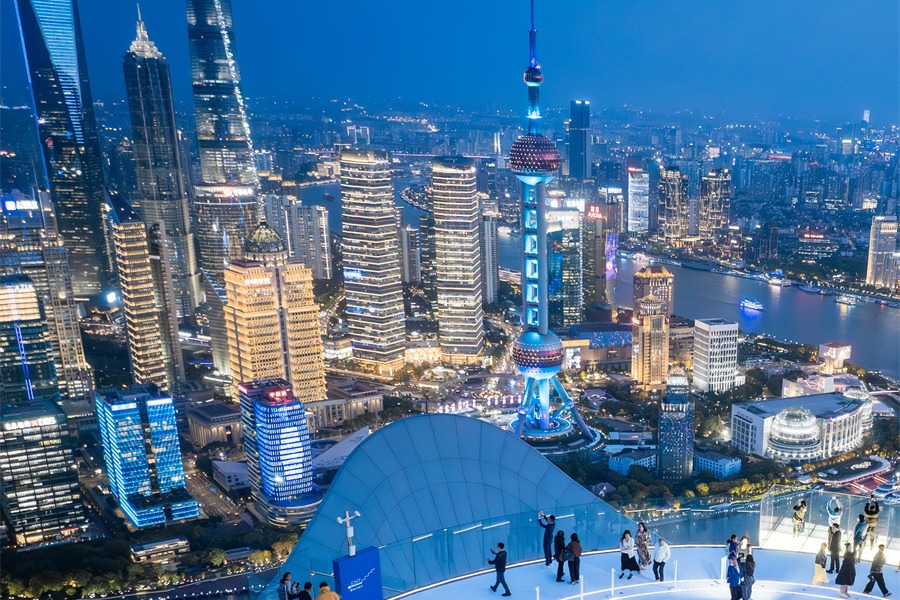
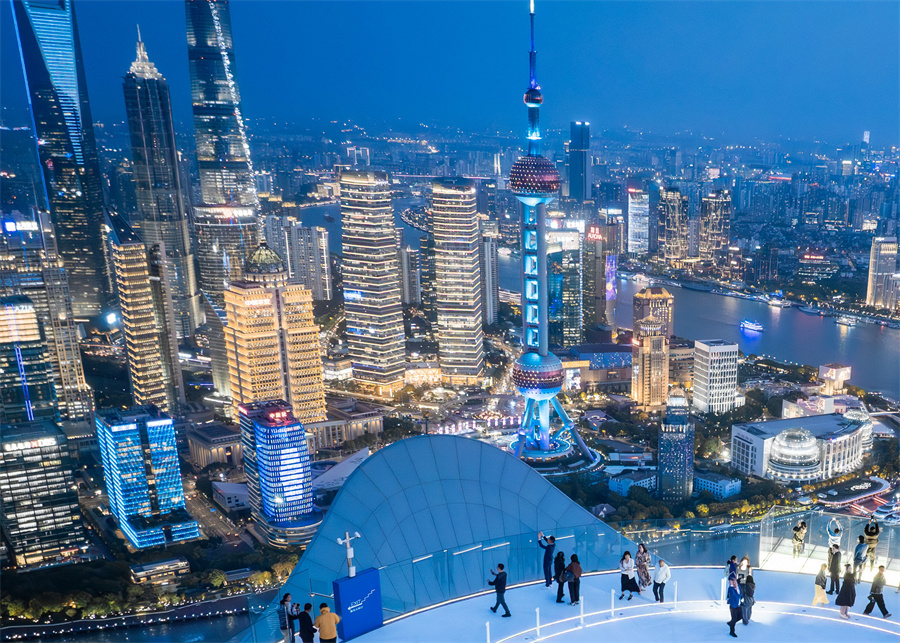
Shanghai, on the other hand, is refurbishing the areas along the Huangpu River and Suzhou Creek, in order to sharpen its competitiveness, boost its urban charm, and facilitates its sustainable development, with the focus on improving public spaces, historical and cultural sites, and integrated transportation systems, as well as preserving its ecology.
In a similar vein, in Southwest China's Chongqing, the Yuzhong district leveraging its unique mountainous landscape, has prioritized the development of pedestrian walkways to meet people's commuting needs, showcase its physical characteristics, and preserve its historical and cultural heritage.
There are many such examples across China. As a vital component and strategic priority of Chinese modernization, urban renewal is gaining increasing social attention and support. Through effective collaboration among governments, market players and society, cities are now implementing renewal programs designed to improve its residents' quality of life.
Besides economic potential, China's urban renewal programs have been constantly enhancing people's sense of fulfillment, well-being and pride, thereby fostering urban development that is healthy, secure, inclusive, harmonious and sustainable.
The author is a professor at the School of Architecture, Southeast University, and chairman of Regeneration Division of Urban Planning Society of China.
The views don't necessarily reflect those of China Daily.
If you have a specific expertise, or would like to share your thought about our stories, then send us your writings at opinion@chinadaily.com.cn, and comment@chinadaily.com.cn.