



Intl students in US advised to use caution
Fearing visa repercussions, professors suggest legal preparation and a path out









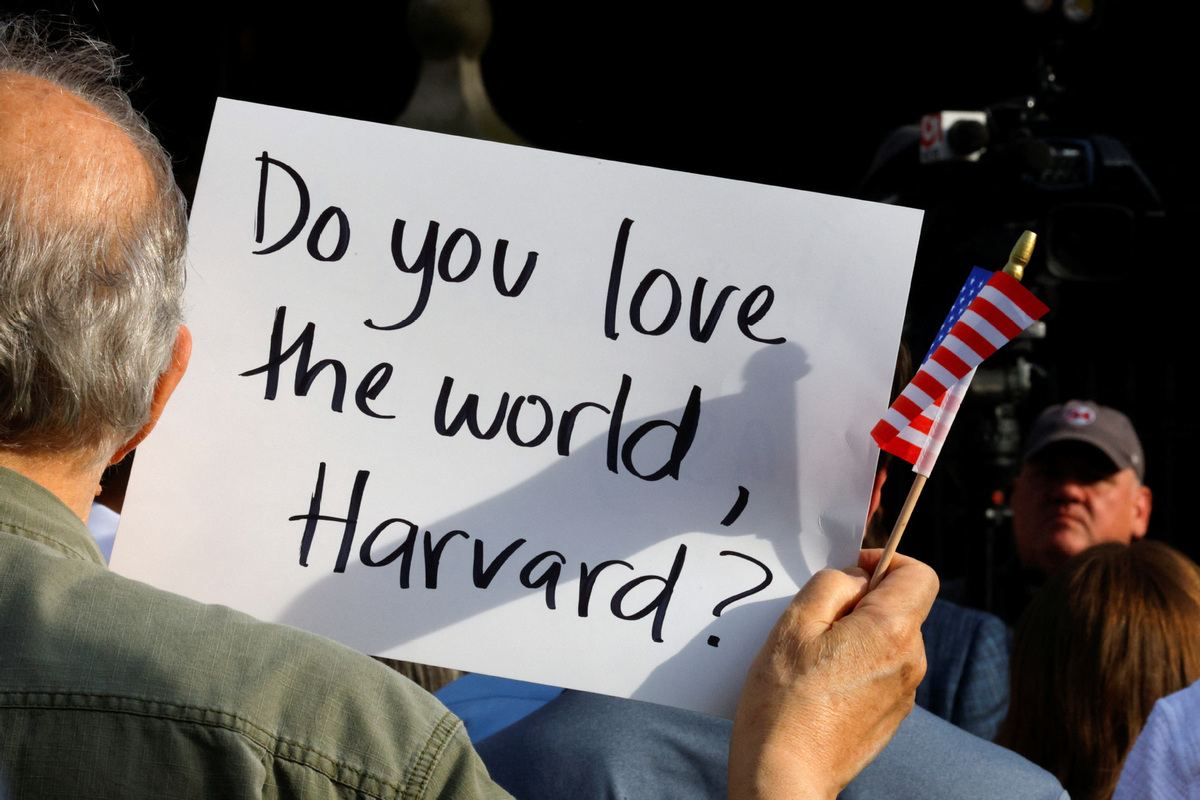
Educators from various US universities are advising international students to clean up their social media accounts and keep political views to themselves, calling their consideration of a third country for higher education a "smart move".
Such words of caution followed several policy announcements by the Donald Trump administration, including pausing interviews for international student visa applications, banning international students from attending Harvard University, and revoking visas of Chinese students.
Although some of those orders were later reversed or abandoned, the fear remains in the community of international students in the US.
In a virtual meeting hosted by the Center for Chinese Studies at the University of California, Los Angeles, on Thursday, Thomas Kellogg, executive director of the Center for Asian Law at Georgetown Law, advised international students to have a good immigration lawyer ready in case of a call from an immigration office.
"They (the US government) are going to hope that people panic and leave the country immediately, and once you're out, it's much more difficult to get back in. So, I would urge any of the folks on this call who are especially STEM students to think about the question of legal representation," Kellogg said.
Gabriel Chin, a teacher and scholar of immigration law at the University of California, Davis, said international students might also take a defiant stance and challenge the government, but it is a "risky strategy". He advised the students "to figure out a way to minimize the friction and minimize the transaction costs".
"For practical purposes, it would be useful to keep your social media clean. If you have opinions on Palestine, keep them to yourself," Chin said. He also cautioned international students not to get arrested at protests, for traffic violations, or playing college pranks.
For those minor offenses, Chin said a US citizen might get probation at school, but an international student might have their visa revoked.
Michael Berry, director of the Center for Chinese Studies at UCLA, who organized the meeting, said that international students are in a particularly precarious situation being in the country on a visa, and speaking up could result in their immediate deportation.
"Those of us that do have greater protection, our citizens, it's our job to stand up and fight that battle for them to be their voice, to be an advocate for those who are more vulnerable."
Mae Ngai, a professor at Columbia University, said international students "have to understand the situation at their particular university".
"Some universities are going to be more willing to help you, and others will not help you," Ngai said. "I think we're in for a very bad time, at least in the short term, maybe even the medium term. In the long term, who knows, right?"
Commenting on the growing interest in studying in third countries, she called it "a smart move".
Other educators also reported hearing about the third-country option from numerous international students.
"The United States cannot stop science," Ngai said. "But science will take place somewhere else if it doesn't take place in the United States.
"Research will continue, but it may not continue in the United States to the extent that it has.
"And the students will go somewhere else. They'll go to Europe. They'll go to China. They'll go to Australia."
Kellogg of Georgetown Law said the US administration is weaponizing international students — especially the Chinese students.
"I hope that our Chinese students and potential Chinese students who are listening from overseas won't give up on us. It is important during this incredibly trying time to differentiate the largest megaphone, which is the Trump administration, from broader US society," Kellogg said.
Kaiser Kuo, host of the Sinica Podcast, told the students not to take comfort from the recent retraction of Trump's student visa policy. "He seems to have backed down. Don't take too much comfort in this. This issue is very much alive, so it will come back."
mayzhou@chinadailyusa.com










