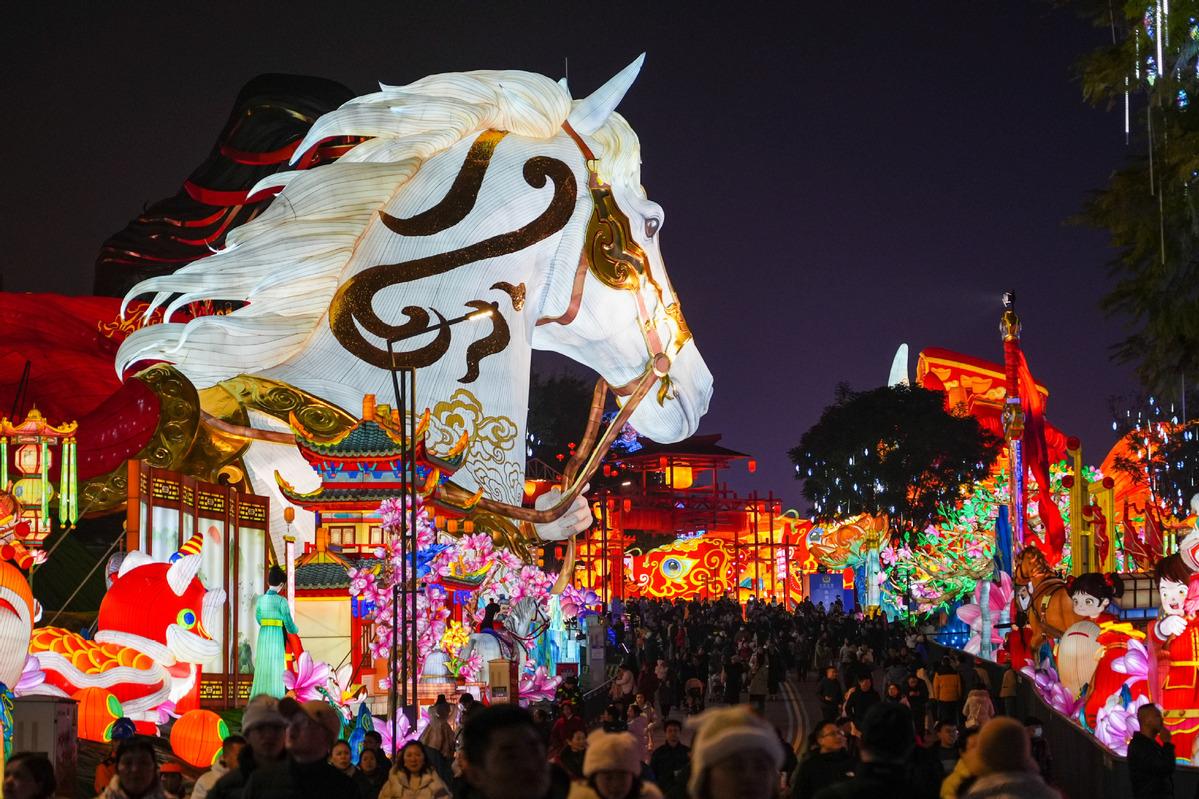
Exploring China where history and modernity collide









China has been steadily opening up its various sectors to the outside world by, among other things, expanding visa-free access and extending visa-free transit stays for people from more countries. The series of tourism facilitation policies it has introduced includes more convenient payment options for foreign visitors, tax refund schemes for overseas travelers, and simplified ticketing procedures for popular tourist attractions.
According to the National Immigration Administration, ports across the country recorded 9.2 million entries by foreign visitors in the first quarter of 2025, a 40.2 percent year-on-year increase, while trade in travel-related services grew at a rapid pace, with imports and exports totaling 584.9 billion yuan ($81 billion), up 21.8 percent year-on-year. Travel services thus became the largest sector within China's service trade portfolio.
China is committed to modernizing its tourism sector to ensure it better serves foreign visitors, showcases China's image, fosters mutual learning among nations, and promotes economic growth. In this context, the continued expansion of unilateral visa-free policy, the optimization of visa-free transit policy and improvements in tax refunds and payment systems have created more choices for inbound tourists. As a result, China is attracting more foreign tourists.
The accelerated recovery of airlines worldwide, including the increase in the number and frequency of flights, has helped boost inbound tourism. According to the Civil Aviation Administration of China, Chinese and foreign airlines operated an average of 6,395 international passenger flights per week in the first quarter of this year, linking China with 78 countries. And in response to growing international travel, 42 major airports, 41 airlines and 12 ticket sales platforms have improved their payment systems, including allowing foreign visitors to use both domestic and international bank cards, and exchange foreign currency.
In the past, inbound tourists' itineraries were dominated by traditional attractions such as the Terracotta Warriors in Xi'an, the Great Wall in Beijing and Mount Huangshan in Anhui province. But nowadays, thanks to the cultural scenes presented in the video game Black Myth: Wukong, the vibrant daily life in China showcased in videos by US influencer IShowSpeed, and modern metropolises and idyllic towns full of local charm have all become must-visit attractions for many foreign tourists.
Besides, China's diverse tourism offerings, from major sports events to niche experiences like RV camping and yacht tours, are attracting an increasing number of foreign tourists and offering trendsetting experiences.
The country's tourism sector is undergoing a transformation driven by innovative market players. As part of this transformation, tourism companies, tech firms, cultural organizations and payment platforms are collaborating to offer personalized travel experiences and culturally-inspired products for tourists. These stakeholders are turning government policies such as visa facilitation and tax refunds into competitive advantages by quickly responding to market demands.
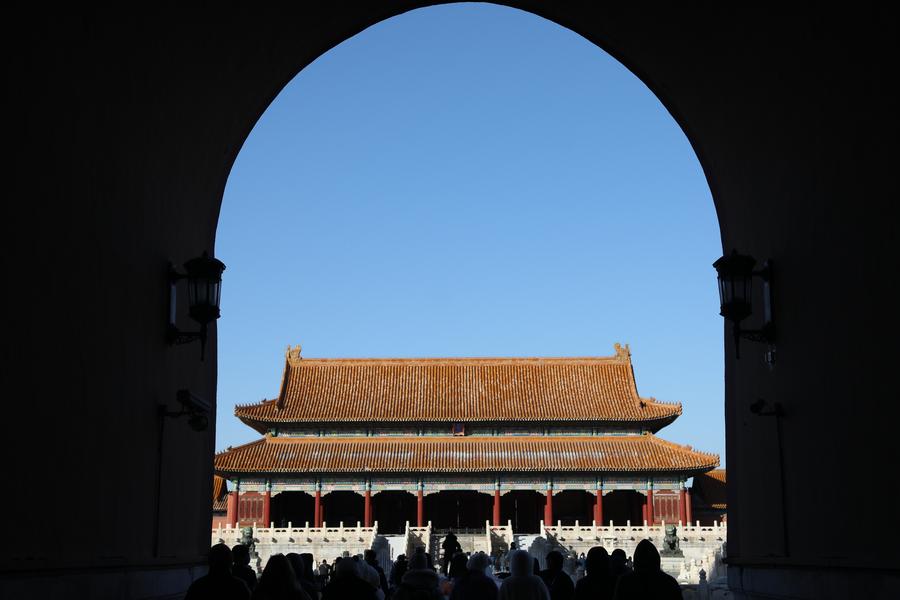
It won't be an exaggeration to say inbound tourism is shining brighter, because it is no longer confined to simplistic "visit the Great Wall and Forbidden City" experiences but instead, it is showcasing China's multi-layered and multi-dimensional development. Behind this transformation lies the impetus of policy dividends, the evolution of the market and the high-quality development of inbound tourism.
Traditional inbound tourism destinations are generating fresh appeal, as former "must-visit" sites are quietly upgrading into "immersive", "interactive" and regenerative tourism ecosystems. At the core of this transformation is their successful effort to redefine their positions in the international tourism market through reinvention, product iteration and innovative services.
For instance, traditional settings are being reshaped into interactive, narrative-rich and culturally resonant spaces. Through live theatrical experiences, history is being brought to life, while micro-vacation sites are transforming into living communities.
On the other hand, new inbound tourism destinations and sites are attracting more and more international visitors, with many second- and third-tier cities and even small towns becoming popular with international travelers.
A similar trend is evident in the source of tourists, with people from emerging markets, particularly from Belt and Road countries, showing rapid growth. An increasing number of tourists from countries such as Kazakhstan, Malaysia and Thailand are now visiting China. These tourists are not only eager to explore China's second- and third-tier cities but also tend to build closer cultural and economic ties with China. Making this possible are improved high-speed rail access, seamless digital payments, and strategic social media campaigns.
The influx of international tourists is elevating China's domestic tourism sector through service upgrade and product innovation. This cross-pollination, combined with a robust domestic market, has created a virtuous cycle, with local attractions elevating their standards and international visitors optimizing resource utilization.
Moreover, the linkage between inbound and outbound tourism is strengthening. According to the National Bureau of Statistics of China, the number of outbound trips from China reached 146 million last year, injecting a great amount of certainty into the global tourism market and reinforcing international confidence in China's further opening-up.
As the Belt and Road Initiative advances, China will further improve its tourism facilitation policies by expanding visa-free access, streamlining payments, and upgrading multilingual services. With the focus shifting from quantitative to qualitative development of the tourism sector, more innovative offerings promise to further transform tourism from mere sightseeing to immersive experiences, writing a new chapter in global cultural exchanges.

The views don't necessarily reflect those of China Daily.
If you have a specific expertise, or would like to share your thought about our stories, then send us your writings at opinion@chinadaily.com.cn, and comment@chinadaily.com.cn.