Time to fix responsibility for climate change









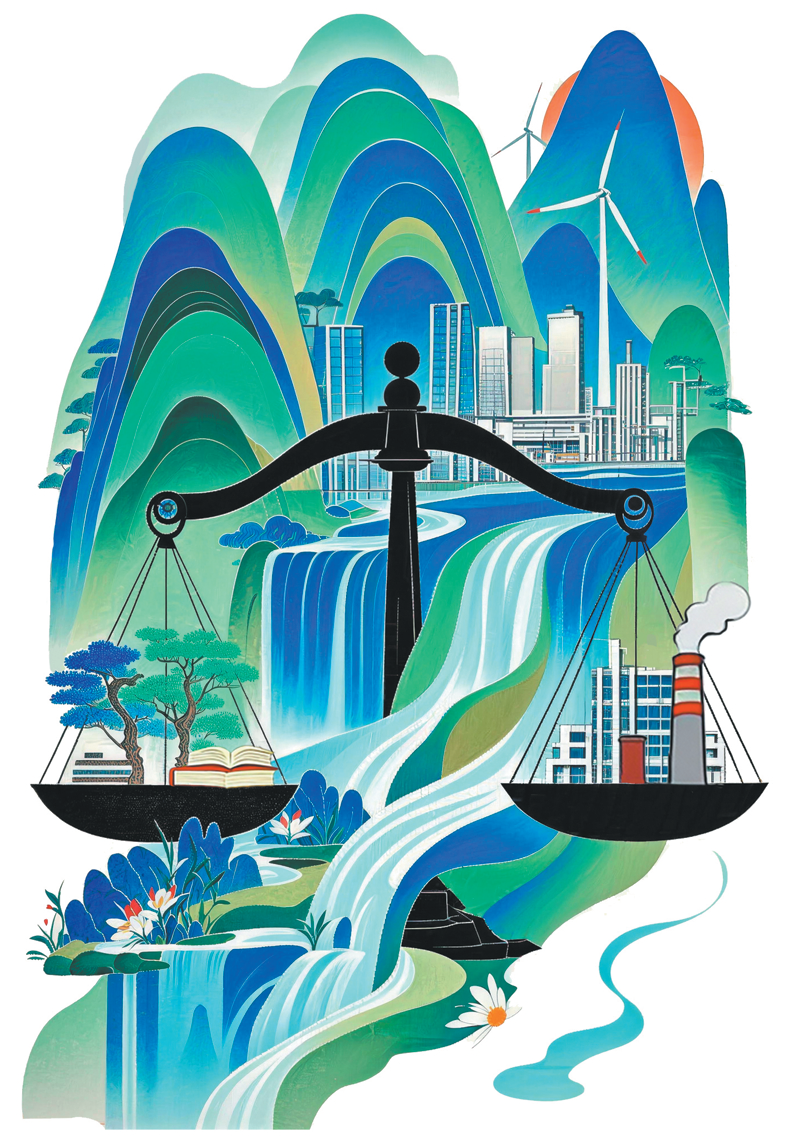
Global warming is one of the biggest challenges faced by humanity today. As emissions continue to rise, global temperatures keep breaking records and the world's poorest nations bear the brunt of a crisis they did little to create.
However, public discourse on climate responsibility remains mired in individualism. Citizens are told to recycle, go vegan and shrink their "carbon footprints" while systemic sources of emissions — from industrial production to state-backed fossil fuel subsidies — remain largely untouched. It is time the global conversation shifts from personal virtue to structural accountability, from lifestyle tweaks to large-scale political and economic reform.
The science behind climate change seems simple: rising levels of carbon dioxide trap heat in the atmosphere, leading to higher temperatures, severe droughts, rising ocean levels and the extinction of many species and ecosystems. But public debate often reduces this complex reality to a few familiar culprits such as cars, coal plants or methane emitted by cows. The solutions offered are equally simplistic: bike to work instead of driving, purchase solar panels and eat more vegetables instead of meat. Individuals are told to be aware of their "carbon footprint" and change their lifestyles to prevent climate change.
These steps are not wrong, but they are not enough. The major sources of pollutants are seldom talked about. For example, the energy used to heat homes globally in the winter is equal to all cars combined. The production of a single electric vehicle generates as much carbon dioxide as constructing just two meters of road. Switching to electric cars helps, but does not end the emissions generated by road construction. The truth is that emissions are a part of a larger system, not just in an individual's daily choices.
Carbon emissions are linked to economic activity. Data show that 63 percent of emissions come from poor or developing countries, countries where the people are not rich, but are trying to achieve a middle-class lifestyle. In order to become middle or upper-class, lower income countries are forced to emit. Urging a developing country to cut back is an attempt to constrain its development, especially when today's rich countries emitted freely on their way to prosperity.
Concrete illustrates this dilemma starkly. Responsible for 8 percent of global carbon dioxide emissions, it is also the cheapest and fastest way to build housing and infrastructure. When environmental protection is weighed against basic shelter, poor and developing countries have very limited room for choice.
Food presents another major challenge. By 2100, the global population is projected to reach around 11 billion. Under modern systems of food production — which depend heavily on fertilizers — it is impossible to produce food without generating emissions. The use of synthetic nitrogen fertilizers releases nitrous oxide, a greenhouse gas nearly 300 times more potent than carbon dioxide. Methane emissions from cattle and sheep account for a substantial portion of agricultural greenhouse gases. Large-scale monoculture farming often requires heavy mechanization and irrigation, both of which increase carbon emissions through energy consumption.
Technologies capable of addressing these problems do exist. Direct air capture technologies can remove carbon dioxide from the atmosphere but its cost ranges from approximately $6.3 to $15 trillion per year. If these technologies were applied to the most polluting industries, the cost of their products would likely double and push companies into bankruptcy.
There is a popular narrative that climate change is a collective responsibility and everyone has a part to play. It has led to the concept of "personal carbon footprint". It is both misleading and politically convenient. It is often easier to shift blame from the largest carbon dioxide emitters onto the average individual than to implement real solutions. Here's a perspective: If an average human eliminates 100 percent of emissions for the rest of his life, it would only offset the equivalent of one second of emissions from the global energy sector. These numbers would make individuals feel less guilty, cynical and even complacent.
Politicians must understand that addressing climate change can be a decisive factor in their political success or failure. They need to tackle climate change substantively — not through symbolic actions like banning plastic straws, but by addressing the largest sources of emissions, such as coal and oil. Policy measures, including support to green technologies and investing heavily in innovations, would help. If industries resist, strict regulations may be required to enforce change or even force noncompliant companies to shut shop. With adequate funding, this strategy could disrupt the existing cycle and help lower prices.
There will inevitably be trade-offs, and not everyone will support every policy, but it is important to recognize that all solutions come with some negative consequences. In the end, everyone can contribute in their own small way — not out of guilt for not making a "big" impact or the belief that they alone can solve climate change, but to collectively drive the systemic changes needed for the future.
The author is a professor of the School of Journalism and Communication at Peking University.
The views don't necessarily reflect those of China Daily.
If you have a specific expertise, or would like to share your thought about our stories, then send us your writings at opinion@chinadaily.com.cn, and comment@chinadaily.com.cn.