


The deceptive beauty of ceramic artistry
Exhibitions of the once highly sought-after white porcelain reveal the sophistication beneath its simple surface, Lin Qi reports.










It's often said that one is easily betrayed by one's eyes. Sometimes, to be more precise, it is actually impeccable workmanship that "deceives" the eye.
Visitors to Blanc de Chine, an exhibition of Dehua white porcelain that opened at the National Museum of China last August, certainly felt that they had been tricked — albeit delightfully — upon seeing a pile of paper with rough edges.
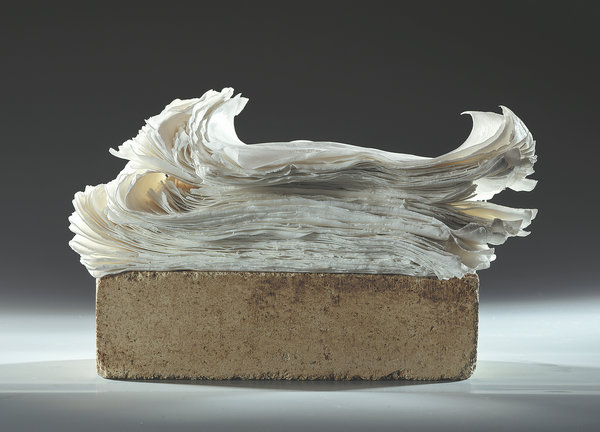
As they approached, many gave voice to their surprise, took photos, and couldn't wait to share the images online as the "paper" actually turned out to be delicate sheets of ceramic created by artist Su Xianzhong.
This "paper" became one of the most talked-about exhibits at the show.
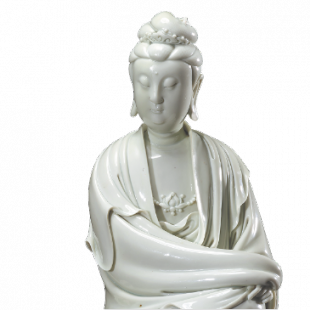
The title of the exhibition — Blanc de Chine — is the French name given to the glossy, milky white porcelain produced for centuries in Dehua county, Quanzhou, Fujian province.
The mass production of Dehua white ware can be traced to the Ming Dynasty (1368-1644), and in the 17th and 18th centuries it arrived in Europe via the Maritime Silk Road, becoming popular and motivating European potters to replicate it.
The contrast between the stiff body and creamy, sleek surface resembling white jelly inspired the name, which means "white from China".
But Dehua was not the only historical hub producing quality white ceramics. From as far north as Lindong town in Baarin Left Banner, Inner Mongolia autonomous region, to as far west in Wuwei in Gansu province, the remains of once booming kilns dedicated to manufacturing white ceramics have been found.