


A celebration for a time of promise
Spring Festival enjoys a growing global profile with recent UNESCO heritage recognition. Zhao Xu explores the cultural roots of this age-old tradition and how it has evolved over time.










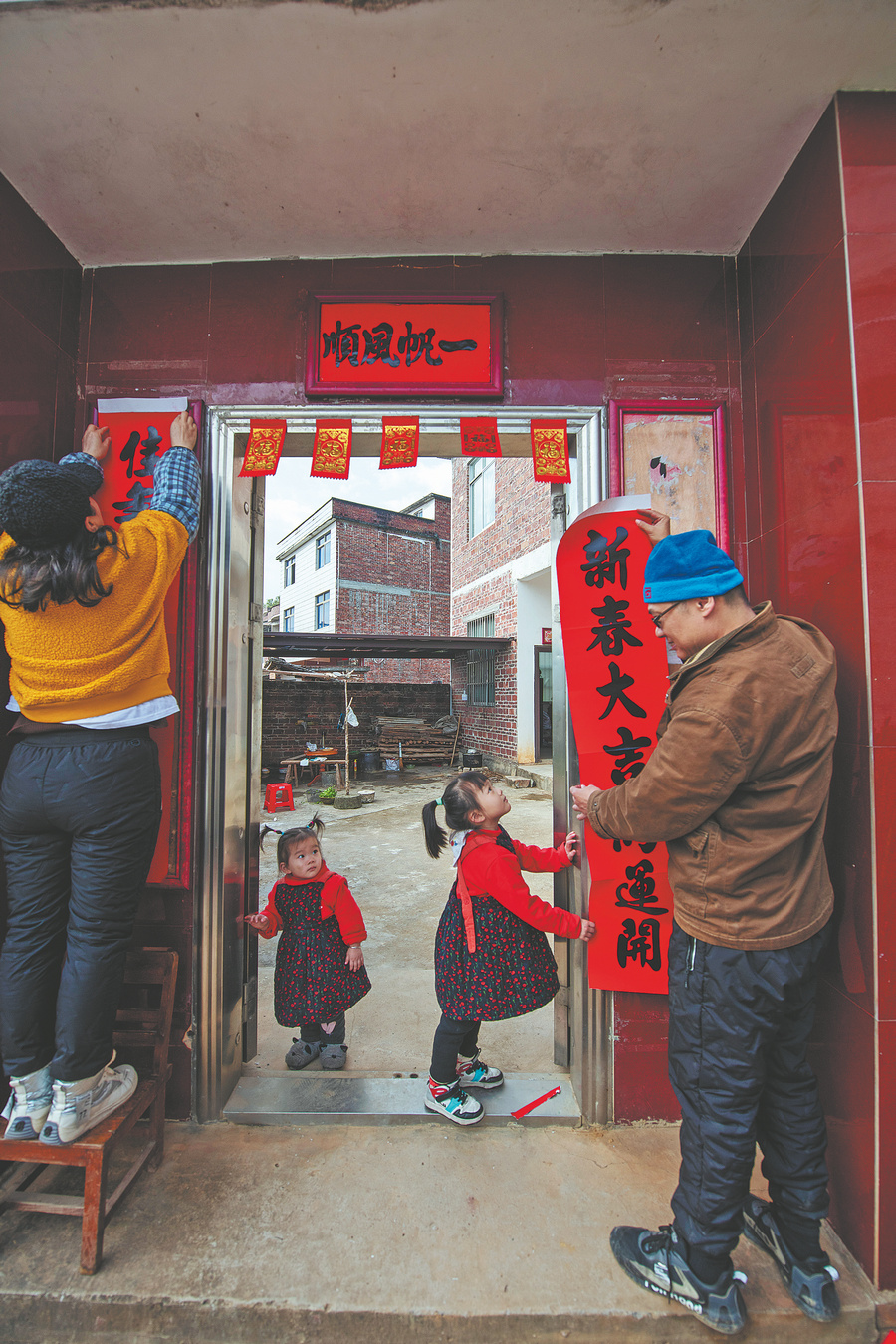
Cherished memories
With time's inexorable march, each moment with family becomes a cherished gem, stored in the memory chest.
The memories of Spring Festival are distinct to each generation, with every generation holding its own unique experiences, often quite different from those of the ones that came before or will come after.
In times of material scarcity, Spring Festival was a rare opportunity for a true feast, a prospect that children eagerly awaited for weeks, even months.
The meal was typically prepared by the family, and the hustle and bustle of the kitchen — the clatter of pots and pans, the aroma of food — enhanced the festive atmosphere.
For children, the very thought of a lavish banquet — a table laden with dishes — was enough to send their mouths watering and their imaginations racing, all amid the joyful chaos of a large family gathering.
Spring Festival was more than just a meal; it was the climactic culmination of a year's hopes and desires, brought to life in one unforgettable dinner, which would begin around noon and stretch on until midnight.
The scarcity began to ease in the 1980s, following China's reform and opening-up initiated at the end of 1978. These sweeping reforms, which significantly boosted economic development, also gave rise to a vast population of migrant workers. By the mid-1990s, their numbers had surged to hundreds of millions.
The labor migration from rural areas to industrial cities not only drove China's economic boom but also profoundly altered rural life and social structures, reshaping traditions such as Spring Festival in lasting ways.
For migrant workers and the families they have left behind — parents, spouses and children — Spring Festival is no longer a pause in agricultural labor but a much-cherished time for reunions, a brief chance to close the distance imposed by economic necessity.
Parents return home with stories of the bustling cities, offering glimpses into a world far removed from the tranquil rhythms of village life. The children, who ache for their parents' presence, savor the moment as they also brace for another farewell.
Before the advent of high-speed railways, the massive flow of people in the days leading up to Spring Festival turned train rides into a grueling ordeal.





