


Retrieving history from the past









"As a result of the new excavation, we have fresh insight, and it solves some long-standing confusion, so it is of great academic significance," Xu says.
An experts' symposium on May 14 revealed that, judging from scale, structure, unearthed written materials and historical literature, the owner of the tomb is probably King Kaolie of Chu.
In 241 BC, King Kaolie moved the Chu capital eastward to Shouchun to distance the state from the rising Qin state to the west. However, 18 years later, Shouchun was conquered by the Qin.
"We generally believed the relocation of the Chu capital was a sign they were weakening," says Xu. "But the scale, type, building style and rich funerary objects at the Wuwangdun Site indicate the Chu still possessed significant strength in Shouchun, thanks to its longstanding history as a major state. This enhances our understanding of the wider political landscape just before the establishment of the Qin Dynasty."
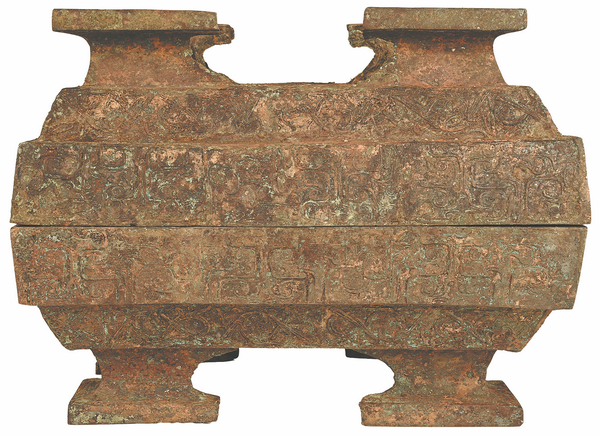
Zhang says the large number of bronze vessels unearthed show that Chu was still economically well-off, even in its last days.
"The vessels show the Chu still had plenty of bronze, a very important strategic resource at that time. This means Chu was still rich at the end of the Warring States Period," he says.
The understanding of the Wuwangdun Site is the culmination of decades of archaeological work on tombs and studies of Chu culture.
"We first started to excavate Chu tombs in Changsha, Hunan province, in the 1950s; the Jinan city ruins in Jingzhou, an important Chu capital during the early stage of the Warring States Period, in the 1970s; and the Shouchun city ruins in the 1980s. They all deepened our understanding of Chu tombs," Zhang says.
"Each individual archaeological endeavor provides us with a fragment of historical information. It is our responsibility to connect these fragments from different periods into a comprehensive framework, to re-create the social landscapes of ancient times."
Contact the writer at wangru1@chinadaily.com.cn