


Retrieving history from the past










Findings at Wuwangdun shed intriguing light on how society was organized millennia ago, Wang Ru reports in Huainan, Anhui province.
The 15-meter-high mound at the Wuwangdun Site in Huainan, Anhui province, has long been recognized as an important tomb, and was listed as a key provincial cultural relic protection site in 1981. As China often takes protective measures for important tombs without necessarily excavating them, Wuwangdun could easily have continued to conceal its millennia-old stories.
However, its silence was shattered by grave robbers. While graves have been plundered throughout history, a major incident in 2015 was the last straw. When the public security authorities successfully cracked the case in 2018, archaeologists inferred from the confessions of the criminals and from field surveys that although many artifacts still lay buried, the underground environment had changed, leaving them exposed to damage. Consequently, an archaeological rescue project began in 2020 and the ongoing project has already yielded exciting findings.

The Wuwangdun Site has been identified as a tomb belonging to the Chu, a vassal state to the Western Zhou Dynasty (c. 11th century-771 BC) from about 2,000 years ago. It is the largest in scale, highest level and most complex Chu structure excavated to date, and the tomb probably belonged to King Kaolie (290-238 BC) from the late Warring States Period (475-221 BC), says Gong Xicheng, deputy director of the Anhui Provincial Institute of Cultural Relics and Archaeology, and head of the project.
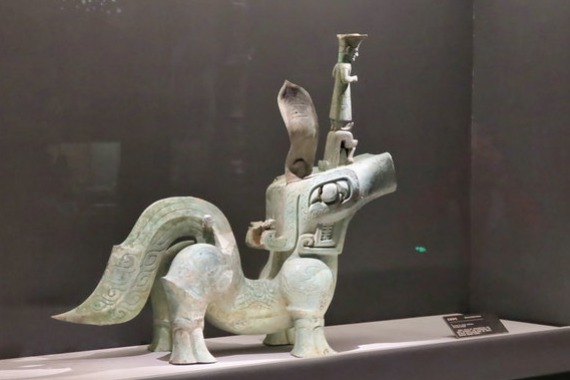
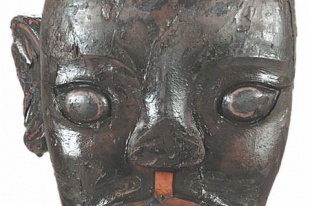
A large bronze ding (an ancient cauldron) and more than 3,000 exquisite artifacts, including sets of bronze vessels, lacquerware, musical instruments, wooden figurines and a great number of animal and plant remains have been discovered.