


Lore of the rings










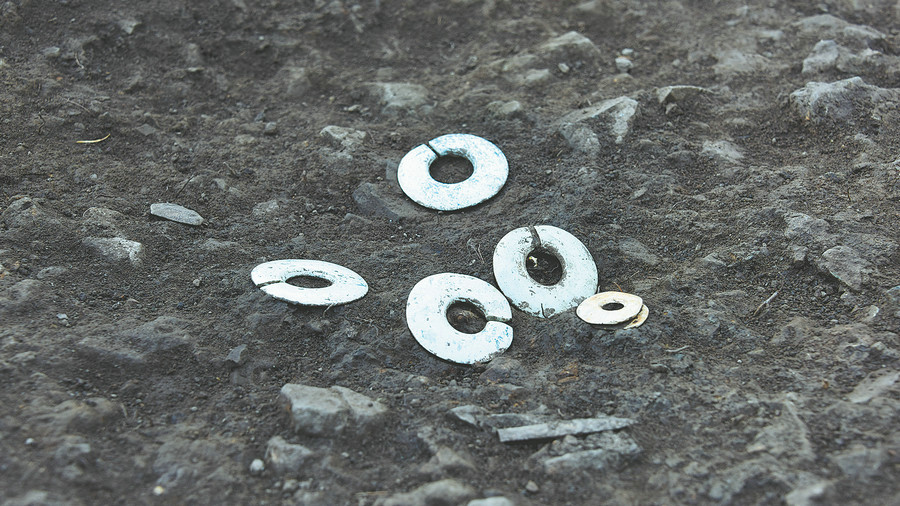
By cutting an aperture across the radius of a disc, the ancient jade workers had not only created a celestial passage, but also imbued a form of ornamental jade with heavenly meaning.
"It's believed that the slit rings, before their secularization, were worn solely by religious figures — the officiants for example — in prehistoric societies," says Teng. "During China's Spring and Autumn Period, between the 8th century and the 5th century BC, they were routinely worn by female members of the aristocracy, and were listed in contemporaneous documents as tian, which shared the same pronunciation with the Chinese character for 'heaven'.
"The name jue, as it's called today, is a misnomer which has only served to conceal the story behind the slit ring."
And that story didn't end there. About 1,300 km southwest of the Xiaonanshan site, in relative proximity to Xinglongwa, lies the heartland of another, later Neolithic culture known as Hongshan (the Red Mountain). There, archaeologists have unearthed not only slit rings dated to between 3300 and 3000 BC, but also what's believed to be one of the oldest types of jade dragon ever found in China, whose wrinkled nose and pricked ear have earned it the nickname "pig dragon".
Dated to around 3500 BC, these pig dragons, whose making clearly involved the use of string saws, all feature a curled-up body with a barely touching head and tail. "They had clearly taken a cue from the slit rings of Xiaonanshan," says Teng.
In the 16th century BC, Chinese history entered the Shang Dynasty, the existence of which is firmly supported by archaeological evidence, including tens of thousands of pieces of bronze and jade ware. Among the latter group is a type of jade dragon coiled in a way that allows its head and tail to almost meet. "Jueformed dragon" is how they are referred to by archaeologists, who couldn't help but notice the striking resemblance between them and the slit rings.
"The ancestors of the Shang people are believed to have migrated from the frozen ground of the northeast to the fertile land of the Yellow River Valley, before they settled down, rose to power and ruled until 11th century BC," says Teng.
"The continuity of Chinese culture, although not always easily noticeable, is remarkable to say the least," she says. "Someone just needs to connect the dots."





