



Salt makers combat climate change to protect tradition









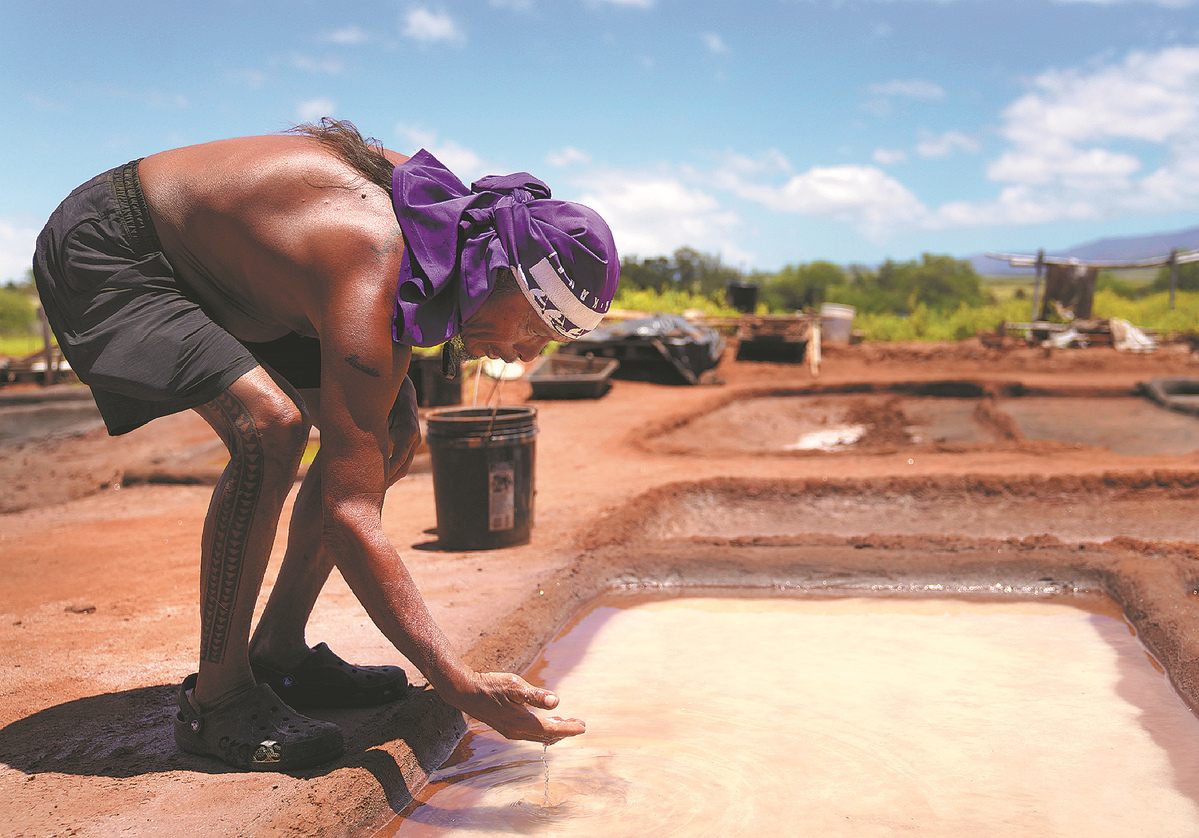
HANAPEPE, Hawaii — On a warm summer afternoon, Tina Taniguchi was on her hands and knees scraping dirt off an oblong depression in the ground. Thick brown hair peeked out from her coconut leaf hat. Splotches of mud stuck to her T-shirt and speckled her smiling face.
Taniguchi smiles a lot when she is working in her corner of the Hanapepe salt patch on the west side of Kauai, a terracotta plot of land about the size of a football field, dappled with elliptical pools of brine, crystallizing in clay beds.
Taniguchi drives about an hour to get here. For her, it is church and play rolled into one — the time she forges a connection to the land.
"It's hard work. But for me, it's also play," Taniguchi said, adding with a laugh. "I play in the mud all day."
Taniguchi's family is one of 22 that have dedicated themselves over generations to the cultural practice of paakai, the Hawaiian word for salt. This is one of the last remaining salt patches in Hawaii. Its sacred salt can be traded or given away, but must never be sold. Hawaiians use it in cooking, healing, rituals and as protection.
Under threat
Over the past decade, this tract has been under constant threat due to development, pollution from a neighboring airfield, sand erosion from vehicle traffic and littering by visitors to the adjacent beach.
In addition, climate change threatens to obliterate the practice with rising sea levels and modified weather patterns. This year, the salt-making season lasted barely three months from July to September because of above-average rainfall. During a good year, work typically begins in May and ends in November.
Malia Nobrega-Olivera's grandfather was instrumental in forming a group of salt-making families called Hui Hana Paakai. She is also an educator and activist who leads efforts to preserve this centuries-old tradition. The organization's goal, she said, is to speak with a collective voice when communicating with the landowner, the state of Hawaii, whenever issues arise.
After the Maui fires in August that claimed 100 lives, the practitioners there specifically requested white Hanapepe salt from Nobrega-Olivera to bless and "calm" the traumatized island, particularly areas that housed makeshift morgues.
The salt makers continue to send their salt to survivors who are rebuilding their lives, so they can "make their food delicious and bring some of that joy into their lives", she said.










