



Ancient poems capture the soul of Mid-Autumn Festival









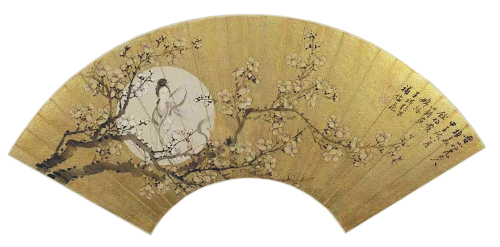
The moon shines brightly on ageless classics
In 1076, Chinese poet and essayist Su Shi found himself in self-imposed exile hundreds of kilometers from the capital of the Northern Song Dynasty (960-1127) after a disagreement with those in power.
Su, who was 39 at the time, wrote the following lines:
Life brings both joy and sorrow, parting and embrace
The moon waxes and wanes in its endless change of phase
Such has been the way since the beginning of the human race
May we live a long life in her grace
To share its luminance despite any distance
His newfound freedom allowed Su (1037-1101) to go hunting — an experience he also captured through words — and to be philosophical on the night of Mid-Autumn Festival, which falls on the 15th day of the eighth month in the Chinese lunar calendar.
Su did what every Chinese was and is supposed to do on this particular night — gaze at the moon.
Missing his younger brother, he came up with lines that seamlessly fused his imaginings of a journey to the moon:
I wish to ride the wind to the celestial palace
But it is the coldness of the jade halls that I fear
He depicted the ethereal quality of the moonlight as traveling silently "across the vermilion pavilion, through the latticed window, over the face of the sleepless".
Su then started to think deeply about the cyclical nature of all things, which not only dictated the moon's phases, but also made every meeting the beginning of a farewell.
Beautiful and contemplative, Su's writing resonated with Chinese during the next millennium for a particular reason. The moon, considered to be at its roundest and brightest during Mid-Autumn Festival, represents the one thing people have always longed for but have found elusive, if not completely unobtainable: completeness.
One man who embraced that fleeting moment of completeness was the Song Dynasty poet Zhao Dacheng. He wrote these lines as a glowing tribute to the moon:
All bright things drowned out by the moon's luminosity
All dark seas lit up by her radiance
This work would not have become so well known had not Emperor Huizong (1082-1135), the eighth emperor of the Northern Song Dynasty, transcribed it and turned it into a masterpiece of calligraphy in 1110. The work is part of the collection at the Palace Museum in Beijing.
This was not the only time Mid-Autumn Festival was closely associated with a Chinese emperor.


- Fireworks show dazzles Shanghai audiences
- Shanghai Qingpu melodies festival wows crowds
- Chinese 'self-media' accounts penalized for misleading publishing
- Tourists flock to Hainan for May Day holiday
- A Date with Shandong: Weifang, the city painting the sky
- Liuzhou incident leaves 4 dead, 1 injured; investigation underway





