



Ecuador launches debt swap for Galapagos Islands' conservation










Ecuador has launched the largest debt-for-nature conservation swap in the world, marking a milestone in the global efforts to protect nature and the environment.
The transaction is complex and groundbreaking and could provide hundreds of millions of dollars to protect the Galapagos Islands, one of the most diverse ecosystems in the world.
Ecuador had sold $1.63 billion worth of international bonds that it could not really support. Investors who bought those bonds, to stem greater losses, sold them to Credit Suisse for about 40 cents on the dollar. With support from several international organizations, the bank turned those bonds into a single loan of $656 million.
The government in Quito will put $450 million of those funds to preserve the Galapagos Islands over the next 18.5 years. The groundbreaking deal is expected to save the country $1.1 billion in debt payments over the next couple of decades.
"Through this historic transaction, we are bolstering global confidence among investors and lenders, potentially opening doors for job creation and future economic growth," Pablo Arosemena-Marriott, Ecuador's minister of economy and finance, said in a public statement on May 9 when the swap was announced.
Arosemena-Marriott highlighted the multifaceted benefits of the world's largest debt-for-nature swap, noting that Ecuador is safeguarding its irreplaceable natural assets, reducing public debt, enhancing fiscal stability, and creating opportunities to address other essential needs such as healthcare and education.
While conservationists cheered the deal, not everyone thought it was a good idea.
Global rating firm Moody's said the transaction was, essentially, a default and called it a "distressed exchange". Moody's said the debt-for-nature swap caused investors to lose money on the initial bonds.
Still, environmentalists, researchers and volunteers all cheered the transaction, saying the move will strengthen Ecuador's capacity to protect the area of the Galapagos and around them, improving monitoring and control to preserve vital marine ecosystems.
Meanwhile, some locals worry about how the new funds will be managed.
"Unfortunately (the resources) are going to be used by the same groups, the same people who are in the foundations, to support themselves, and that is where we do not see the support to the community, nor projects that go directly to the community," Gonzalo Pallo, owner of Rancho Ecologico El Mirador, a camping lodge in the island of San Cristobal, told China Daily.
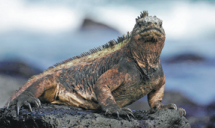
The Galapagos is home to critically endangered migratory species, including whales and hammerhead sharks, sea turtles and other unique marine life. The funds will support Ecuador's initiatives to monitor ocean health, promote sustainable fisheries, and enhance climate resilience.
"In terms of biodiversity, the Galapagos is home to some of the most iconic species, such as the Galapagos sea turtle and hammerhead sharks, along with other animals unique to the Galapagos. The currents of three oceans converge at the Galapagos, making it a unique place to study climate change," said I-Sah Hsieh, principal social innovation manager at SAS, an AI and analytics company.
Dentons, the law firm that advised the Ecuadorian government on the debt-for-nature swap, said Ecuador is committed to making quarterly payments of $4.5 million dedicated to conservation and linked to the debt exchange.
The writer is a freelance journalist for China Daily.










